hot art bali: Interview with Made Palguna
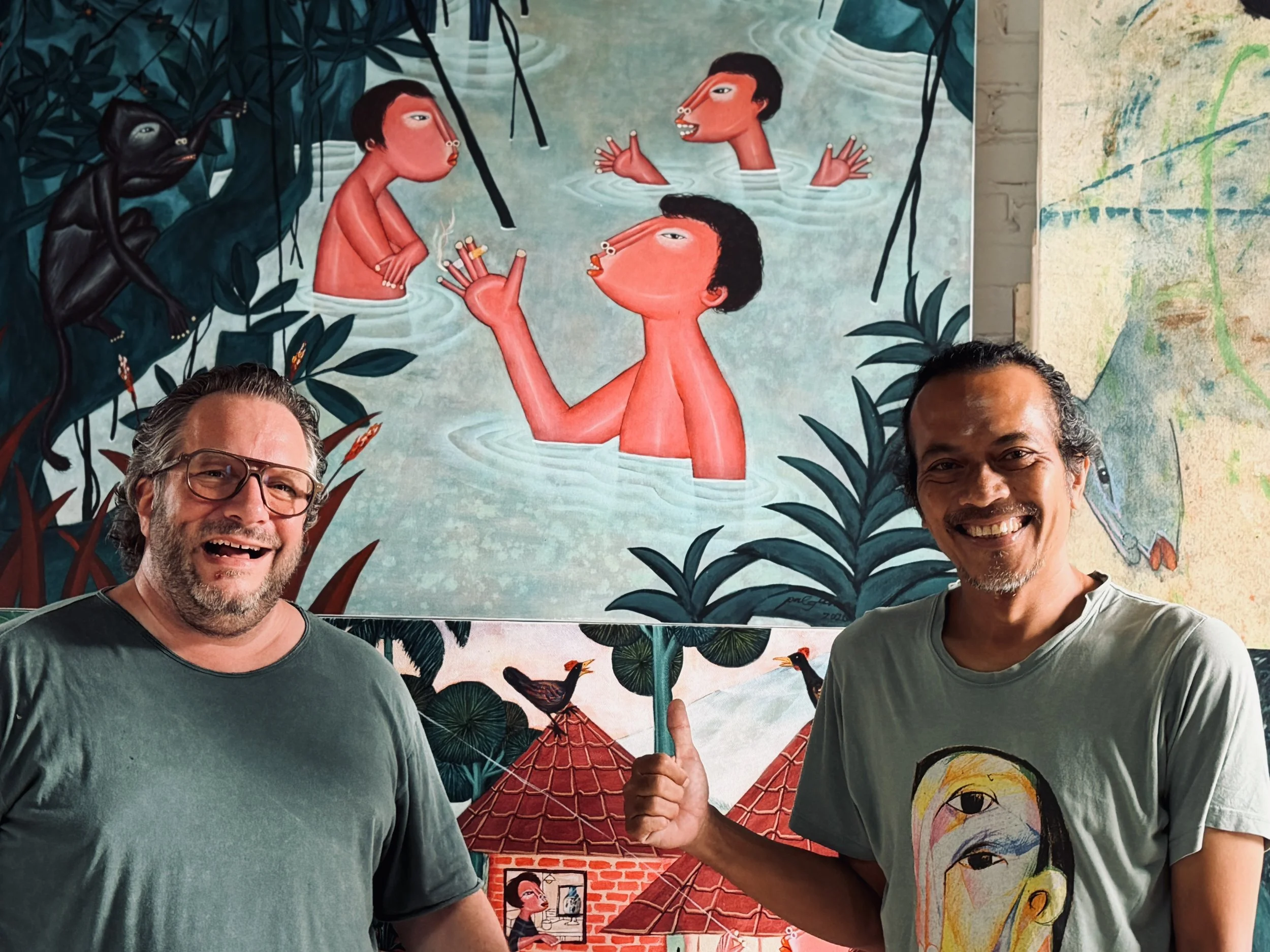
Olivier Varossieau and Made Palguna at the Art Cube Studio
Interview by Olivier Varossieau
English Version
Olivier Varossieau: Your recent exhibition “Pop-Up” reveals a more spontaneous and expressive visual language. How would you describe this shift in your artistic approach?
I Made Arya Palguna:
With “Pop-Up”, I wanted to introduce my artistic values through different media and techniques on canvas. The title itself reflects this idea—like a digital pop-up that appears suddenly and disappears again. It represents a moment, an encounter.
At the same time, experimentation has always been central to my practice. I enjoy working with a wide range of materials and techniques, which allows me to stay fresh and adaptable. This is also why I work across sculpture, ceramics, and installation so I am not limited to the studio, but can create in many different environments.
Olivier Varossieau: Your work has become increasingly poetic and symbolic. What drives this evolution?
Palguna:
It comes from life experience. As I grow older, I become more reflective. Life brings happiness, challenges, and complexity, and over time you begin to understand these layers more deeply. That naturally shifts the way I express myself—towards something more subtle, more symbolic.
Olivier Varossieau: Everyday life plays an important role in your work. How do you transform personal experiences into universal narratives?
Palguna:
My work is a reflection of my life—how I observe people, my environment, and society. I often place myself or my family at the center of these narratives.
Rather than speaking about others, I prefer to speak about my own experiences—what we do, how we interact with the world. From there, the work can become criticism, humor, or even something absurd, but it always comes from something personal.
Olivier Varossieau: As a father of three, how does family life influence your artistic practice?
Palguna:
My family is a major source of inspiration and motivation. Everyday conversations, small moments, even jokes these become ideas.
Everything I experience with my wife and children stays in my mind, and later I translate it into visual form. Sometimes I even feel I cannot work without hearing their voices—it is part of my rhythm, my energy.
Olivier Varossieau: After many years in Yogyakarta, you returned to Bali. How has this shaped your artistic identity?
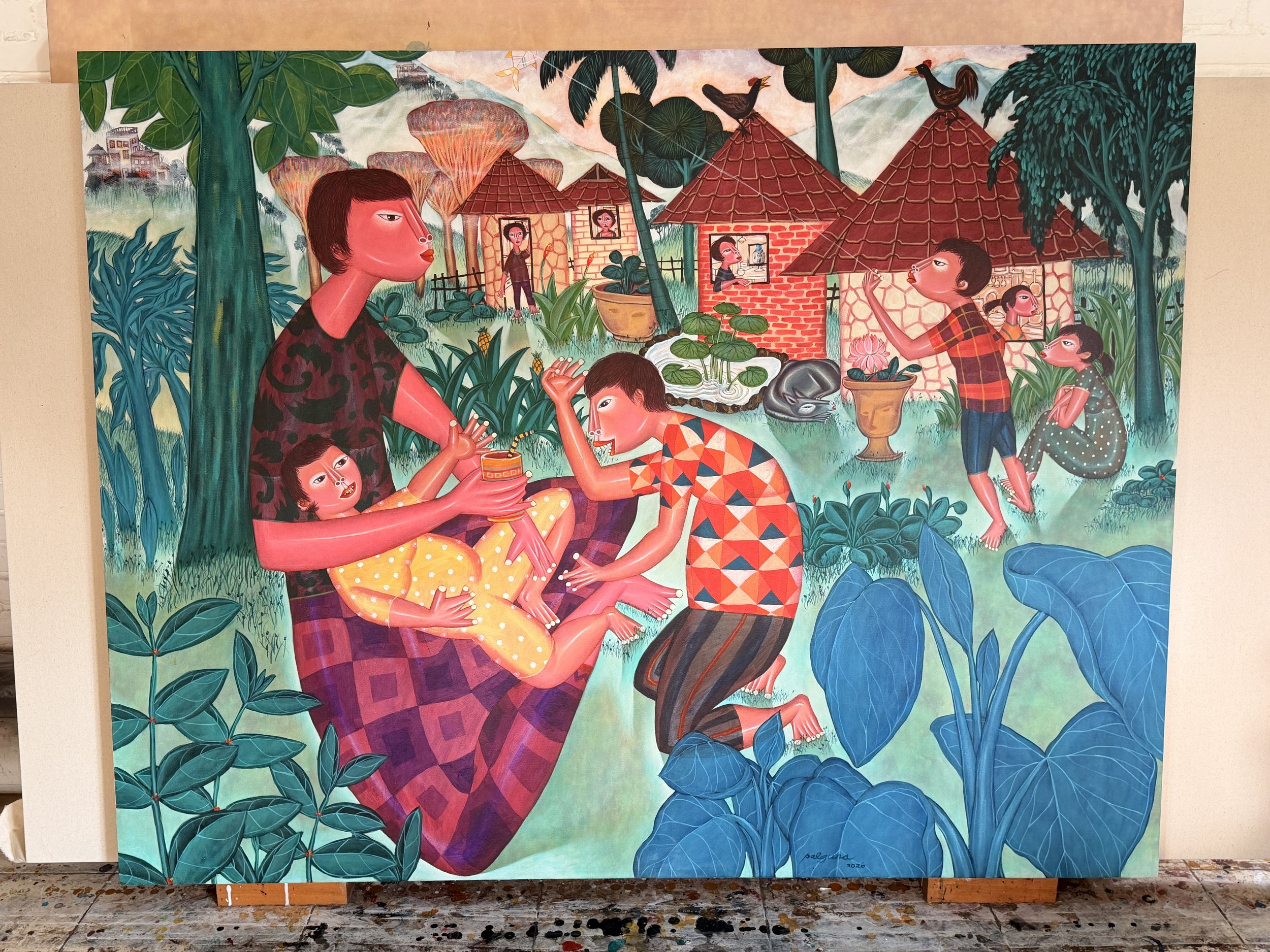
Family Life by Made Palguna
Palguna:
Even while living in Yogyakarta, I continued to live with Balinese traditions and rituals. So returning to Bali did not fundamentally change my identity.
However, being back in Bali brings new encounters, new people, and new challenges. These experiences generate fresh ideas and new perspectives within my work.
Olivier Varossieau: Your work often contains subtle social critique. How do you balance beauty with criticism?
Palguna:
I prefer to criticize in a polite and subtle way—through satire. I want to remind viewers of what they may have forgotten or lost over time.
By using symbols and familiar imagery, I invite people to reflect on their own experiences and rediscover what is important to them.
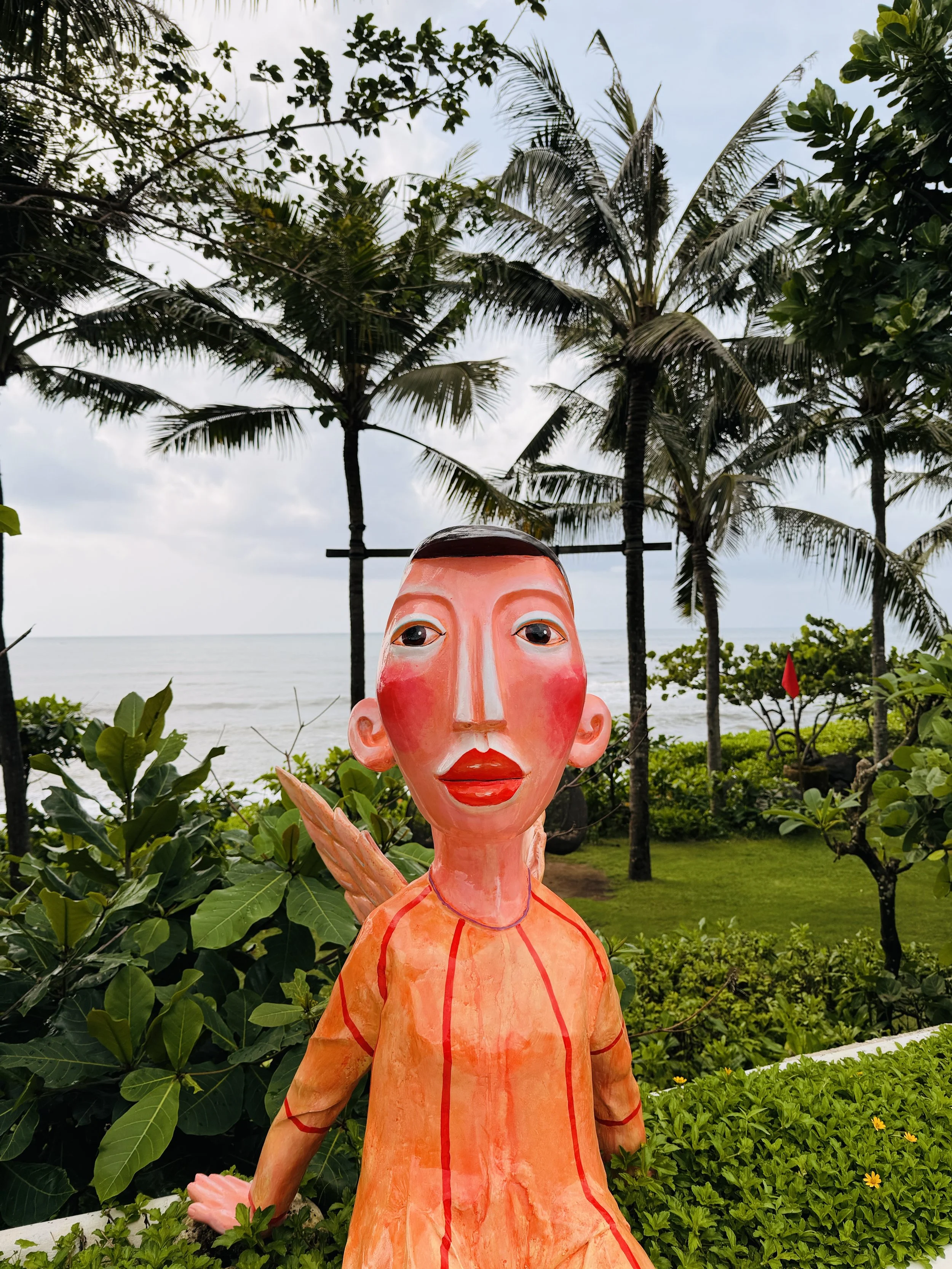
Relaxing Angel by Made Palguna at Komaneka Keramas
Olivier Varossieau: Material experimentation plays a strong role in your work. Why is this important?
Palguna:
Material exploration is essential. Every material offers new possibilities. My experience in residencies taught me to work with whatever is available, which expanded my approach.
It allows me to create in different places and contexts, without limitation.
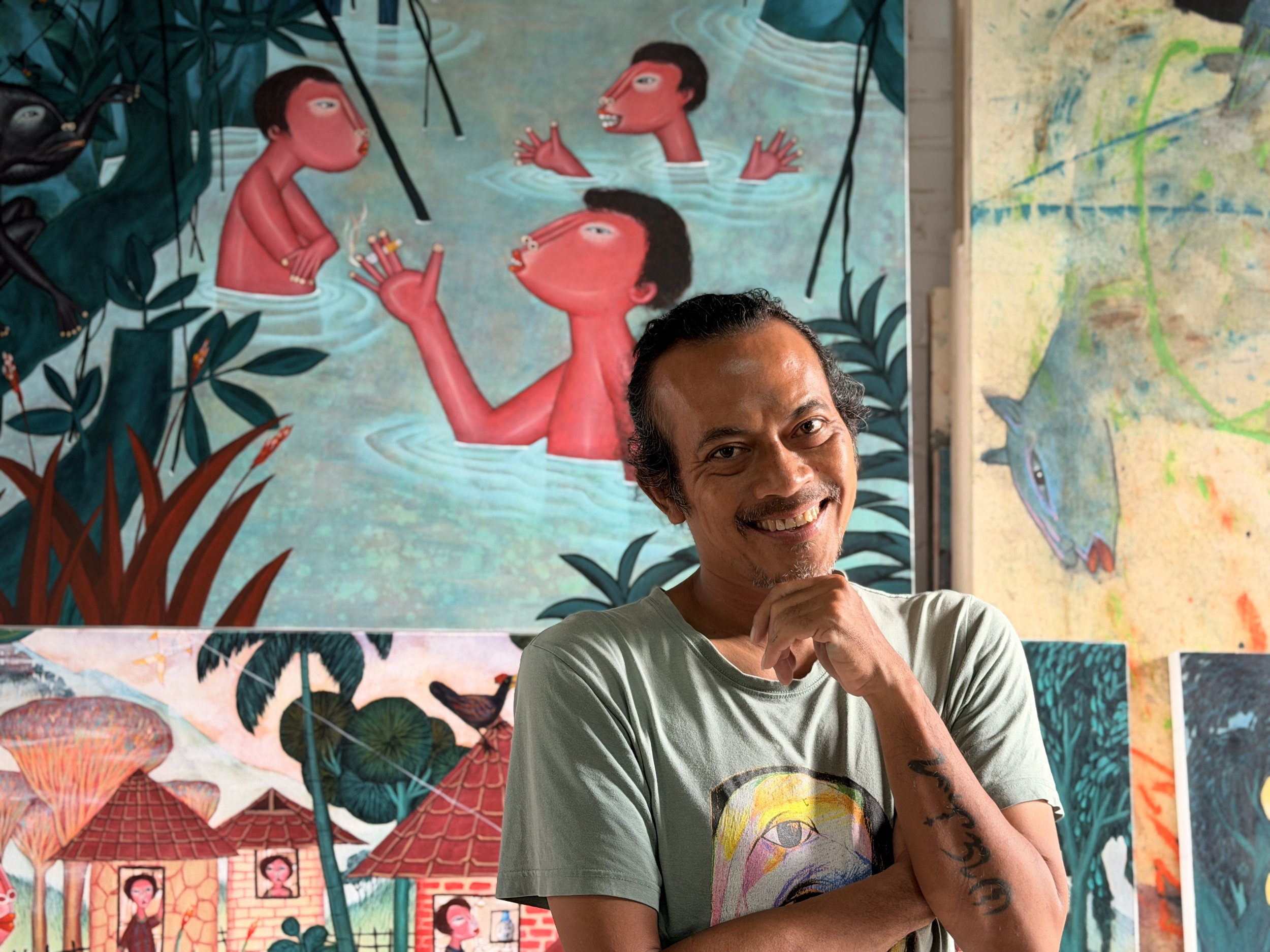
Made Palguna at Art Cube Studio
Olivier Varossieau: Do you see your work as a form of emotional release?
Palguna:
Yes, in many ways. Art is like an ongoing dialogue with myself—a space where I can reflect, question, or even complain.
It becomes a dialogue with the audience when they connect with the work. If not, it remains something personal.
Olivier Varossieau: What are your future ambitions?
Palguna:
I am always asking myself what to explore next. There are so many ideas and materials I want to work with. The challenge is deciding what to develop and when.
I see my practice like creating music albums—sometimes combining different ideas into one body of work, sometimes presenting something entirely new. The goal is to keep the audience curious.
Olivier Varossieau: What legacy would you like to leave behind?
Palguna:
I don’t know if my work will become a legacy. But I hope to be part of the Balinese and international art scene.
If my work remains meaningful or memorable in the future, that would already be something very special.
Versi Bahasa Indonesia
Wawancara dengan I Made Arya Palguna
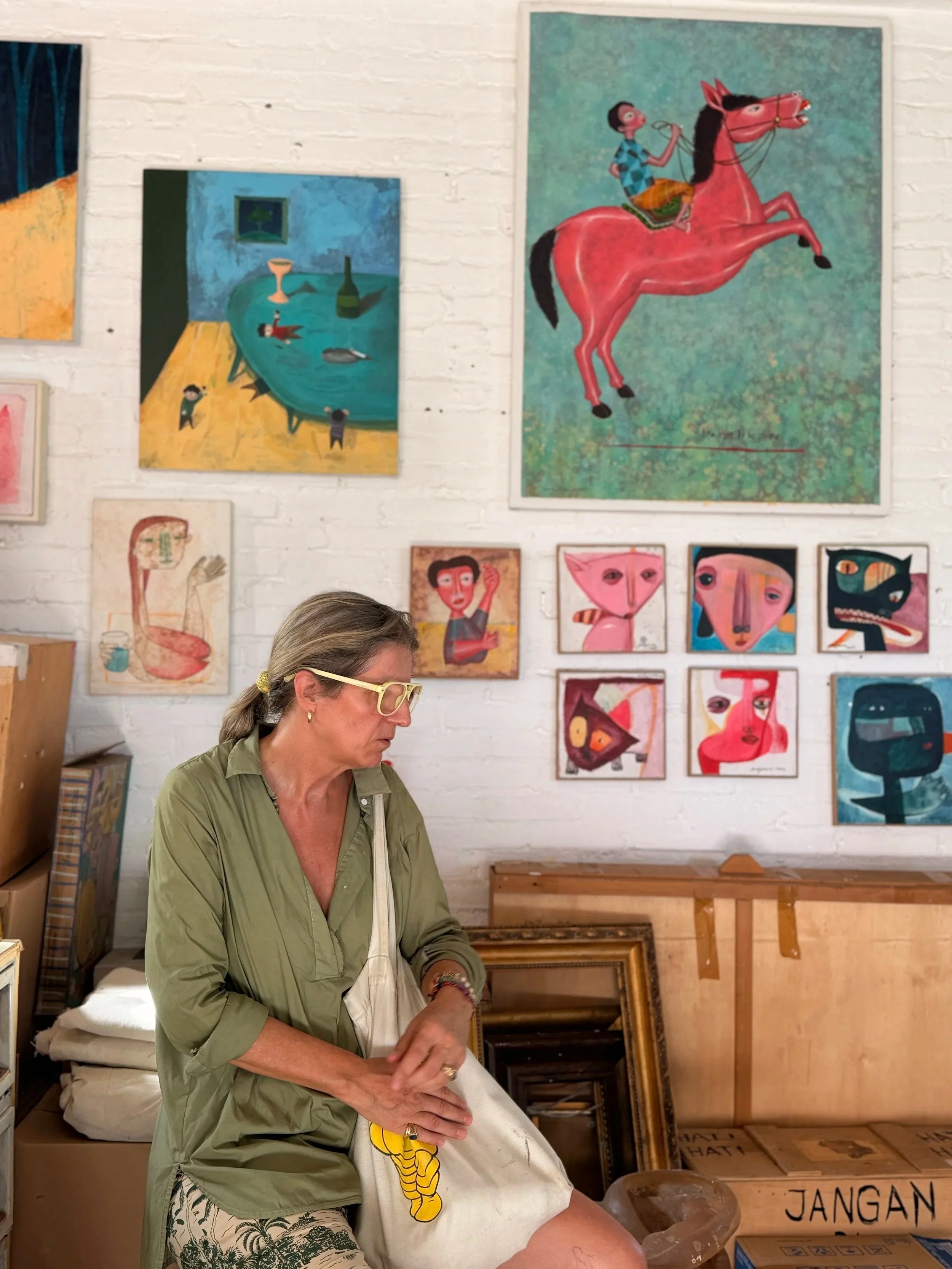
Isabelle Vroom at Art Cube Studio with Made PAlguna
Wawancara oleh Olivier Varossieau
Olivier Varossieau: Pameran terbaru Anda “Pop-Up” menunjukkan pendekatan visual yang lebih spontan dan ekspresif. Bagaimana Anda melihat perubahan ini?
I Made Arya Palguna:
Melalui “Pop-Up”, saya ingin memperkenalkan nilai artistik saya dengan media dan teknik yang berbeda di atas kanvas. Judulnya sendiri terinspirasi dari pop-up digital—muncul tiba-tiba lalu hilang.
Eksperimen selalu menjadi bagian penting dalam praktik saya. Saya senang mencoba berbagai material dan teknik, sehingga saya bisa bekerja tidak hanya di studio, tetapi di berbagai tempat dan situasi.
Olivier Varossieau: Karya Anda kini terasa lebih puitis dan simbolik. Apa yang melatarbelakangi perubahan ini?
Palguna:
Itu berasal dari pengalaman hidup. Seiring bertambahnya usia, saya menjadi lebih reflektif. Kehidupan mengajarkan banyak hal—bahagia, sulit, kompleks—dan itu mempengaruhi cara saya berekspresi.
Olivier Varossieau: Bagaimana Anda mengolah pengalaman pribadi menjadi karya yang bersifat universal?
Palguna:
Karya saya adalah refleksi dari kehidupan saya—bagaimana saya melihat orang lain, lingkungan, dan masyarakat. Saya sering menempatkan diri dan keluarga sebagai pusat cerita.
Dari sana, karya bisa menjadi kritik, humor, atau sesuatu yang absurd, tetapi selalu berangkat dari pengalaman pribadi.
Olivier Varossieau: Seberapa besar peran keluarga dalam praktik artistik Anda?
Palguna:
Keluarga sangat berpengaruh. Mereka adalah sumber ide, semangat, dan motivasi saya.
Percakapan sehari-hari, momen kecil, bahkan candaan, semuanya bisa menjadi ide baru. Semua pengalaman itu saya simpan, lalu saya olah kembali menjadi karya.
Olivier Varossieau: Bagaimana kepulangan Anda ke Bali mempengaruhi karya Anda?
Palguna:
Saat di Yogyakarta, saya tetap menjalani kehidupan dan ritual sebagai orang Bali. Jadi secara identitas tidak banyak berubah.
Namun, Bali memberikan pengalaman baru—bertemu orang baru dan menghadapi persoalan baru—yang memperkaya ide dalam karya saya.
Olivier Varossieau: Bagaimana Anda menyampaikan kritik sosial dalam karya Anda?
Palguna:
Saya lebih suka menyampaikan kritik secara halus, melalui satire. Saya ingin mengingatkan penonton tentang hal-hal yang mungkin telah hilang atau terlupakan.
Simbol dan ikon membantu menyampaikan pesan tersebut.
Olivier Varossieau: Seberapa penting eksplorasi material bagi Anda?
Palguna:
Sangat penting. Setiap material membuka kemungkinan baru. Pengalaman residensi mengajarkan saya untuk bekerja dengan apa yang tersedia.
Ini membuat saya lebih fleksibel dalam berkarya.
Olivier Varossieau: Apakah seni bagi Anda merupakan bentuk katarsis?
Palguna:
Ya, seni adalah ruang dialog dengan diri sendiri. Tempat untuk refleksi dan mengekspresikan perasaan.
Ketika penonton terhubung, karya menjadi dialog bersama. Jika tidak, tetap menjadi sesuatu yang personal.
Olivier Varossieau: Apa rencana Anda ke depan?
Palguna:
Saya masih terus mencari—banyak ide dan material yang ingin saya eksplorasi. Tantangannya adalah menentukan apa dan kapan.
Saya melihat praktik seni seperti membuat album musik—kadang menggabungkan berbagai ide, kadang membuat sesuatu yang benar-benar baru.
Olivier Varossieau: Apa yang ingin Anda tinggalkan sebagai warisan?
Palguna:
Saya tidak tahu apakah karya saya akan menjadi warisan.
Namun saya berharap bisa menjadi bagian dari dunia seni Bali dan internasional. Jika karya saya dapat dikenang, itu sudah sangat berarti.