in conversation with selwyn senatori
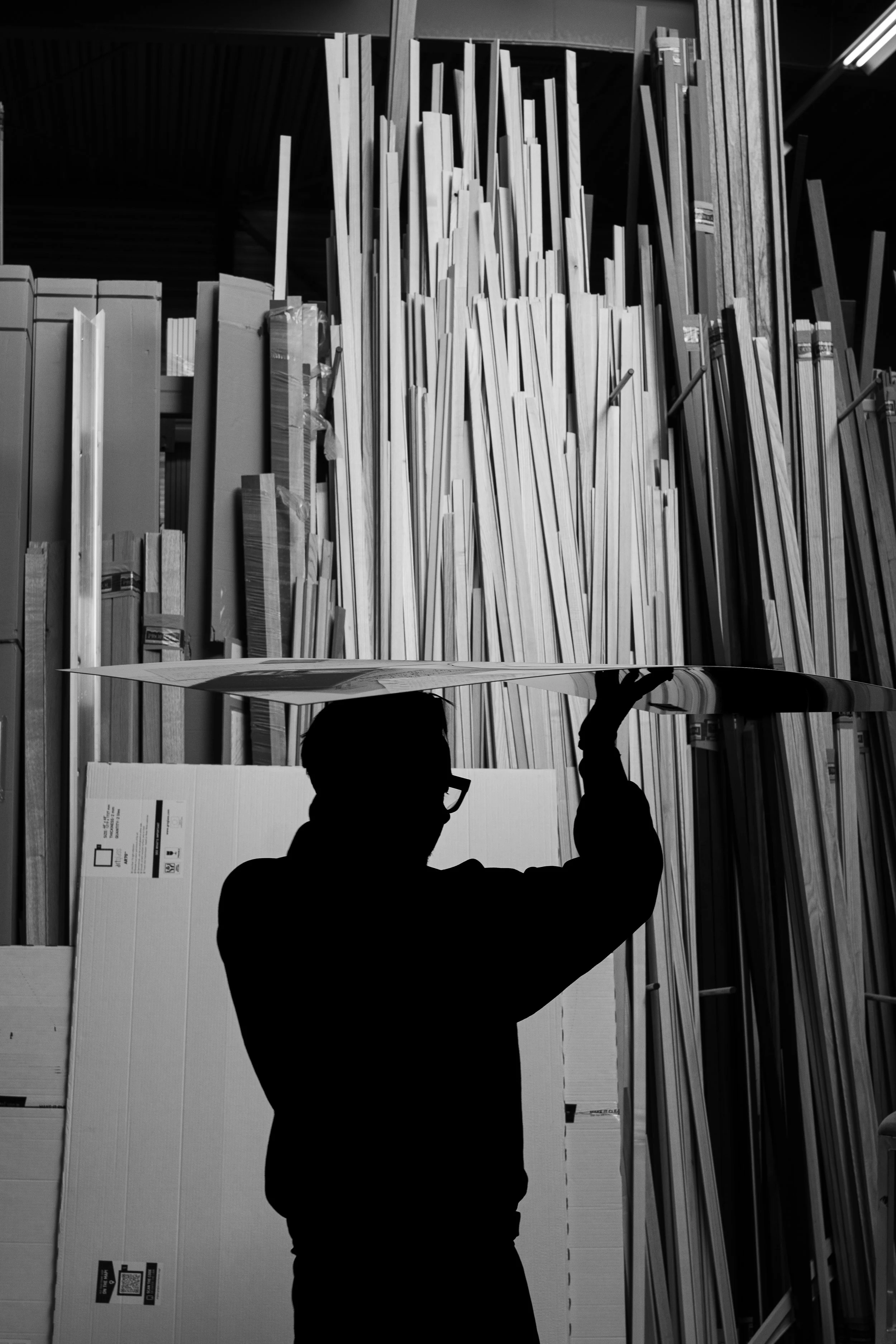
Selwyn working on his balance in his studio.
An interview by Olivier Varossieau
In a decisive new chapter, Selwyn Senatori expands his practice beyond the pictorial plane into sculpture, material exploration, and spatial presence. What appears at first as a radical shift reveals itself, upon closer inspection, as a deeply rooted and inevitable evolution. In this conversation, Olivier Varossieau speaks with the artist about reinvention, risk, and the emergence of a new visual language.
Olivier Varossieau
Since our last conversation in May, your practice appears to have undergone a profound recalibration. How would you articulate this moment within the broader trajectory of your oeuvre?
Selwyn Senatori
It didn’t feel like a rupture that suddenly appeared, but rather a logical expansion from where I started. For me, it’s about going deeper—adding layers, engaging in more profound research, and allowing the work to evolve naturally into something more essential.
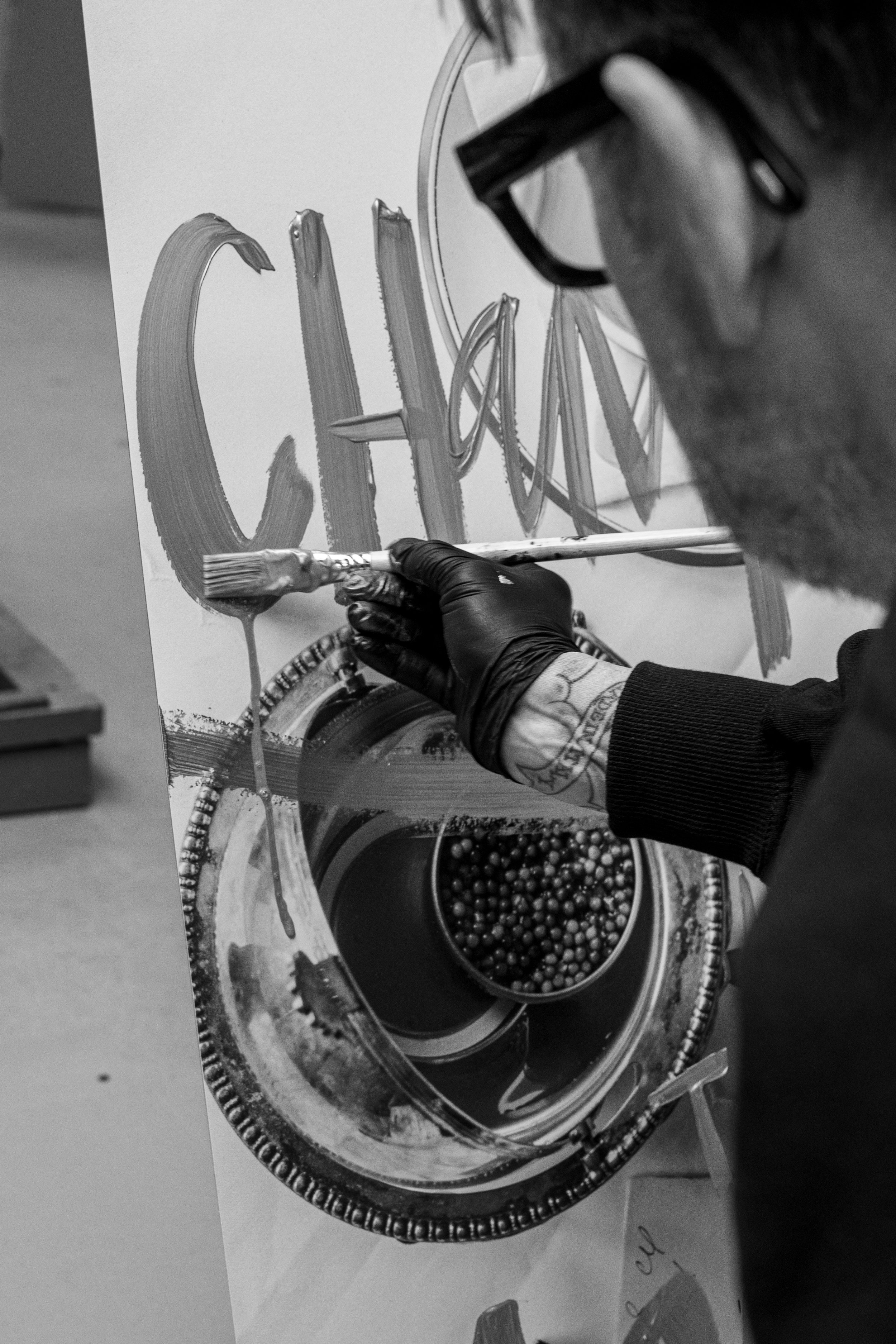
Selwyn Senatori working on his collaboration with Noemi Sarpe for Haute Photography
Olivier Varossieau
Certain narrative fragments such as the evocation of early morning rituals at Hôtel Costes seem to echo motifs from your earlier work. Do you consider these references as continuity, or as a form of conceptual recontextualization?
Selwyn Senatori
Definitely recontextualization. The phrases and affirmations I used before now exist in a different form. Even without using words, by translating them into shapes and objects, they still resonate. The essence remains, but the language has shifted.
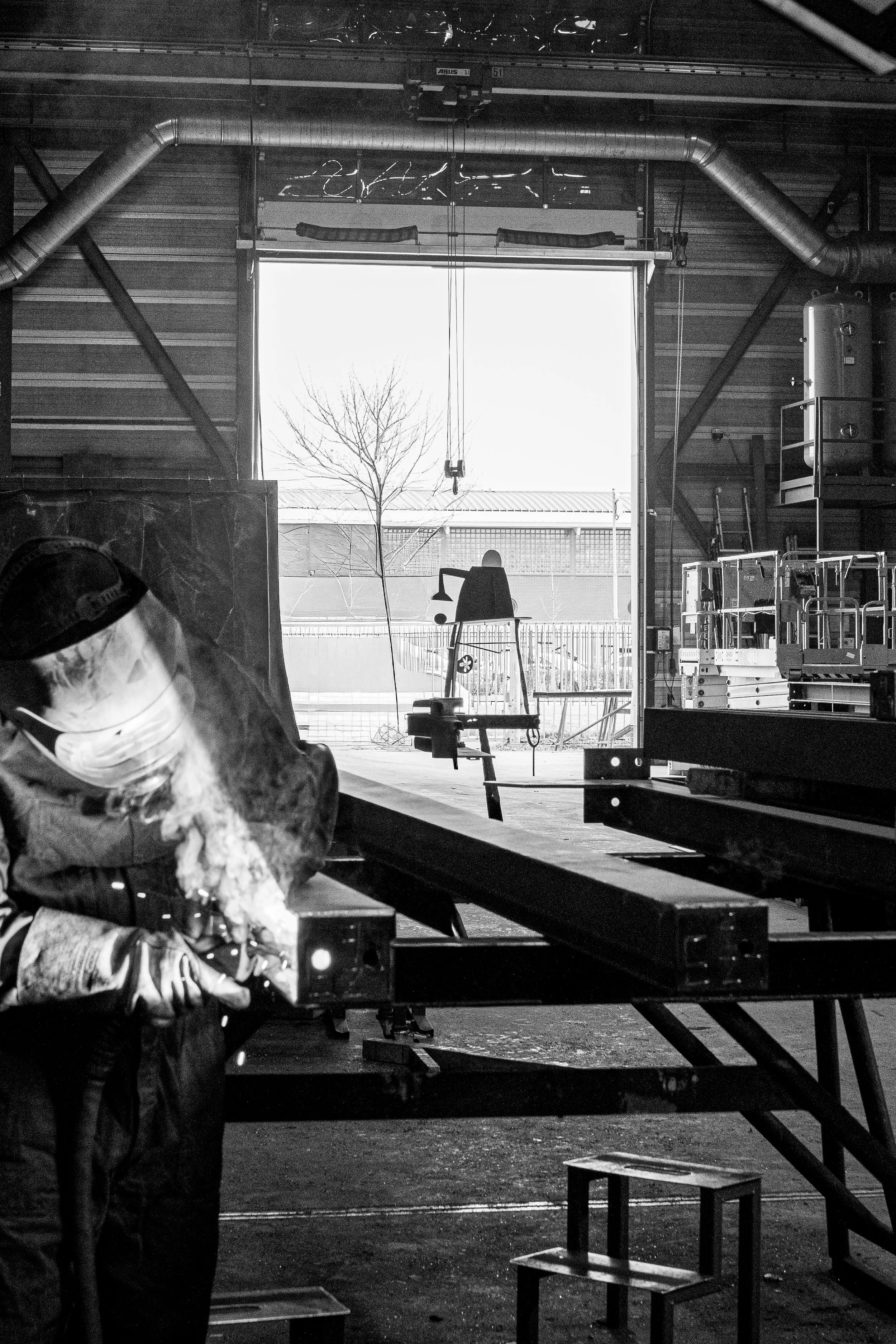
Selwyn welding at the steel factory.
Olivier Varossieau
The introduction of large scale steel sculptures marks a decisive expansion of your material vocabulary. What urgencies led you toward steel at this moment?
Selwyn Senatori
The move from two dimensional to three dimensional work came out of necessity. I needed something more permanent than paint something that not only translates but also occupies space. Steel does that. Once a steel object is finished, it’s there. It holds a position in our universe, my universe.
Olivier Varossieau
Your engagement with Italian marble ateliers suggests a dialogue with classical sculptural traditions. How do you position your work in relation to these histories?
Selwyn Senatori
There are two sides to that. First, it’s natural for me to work with marble or stone there’s a connection to heritage. But I also need contrast. Steel is dark, strong, permanent. Marble can be more vulnerable, more light, but still timeless. That tension between materials is very interesting to me.
Olivier Varossieau
The placement of your first sculpture at Ron Blaauw situates the work in a highly public and experiential context. How do you see the relationship between sculpture and environment?
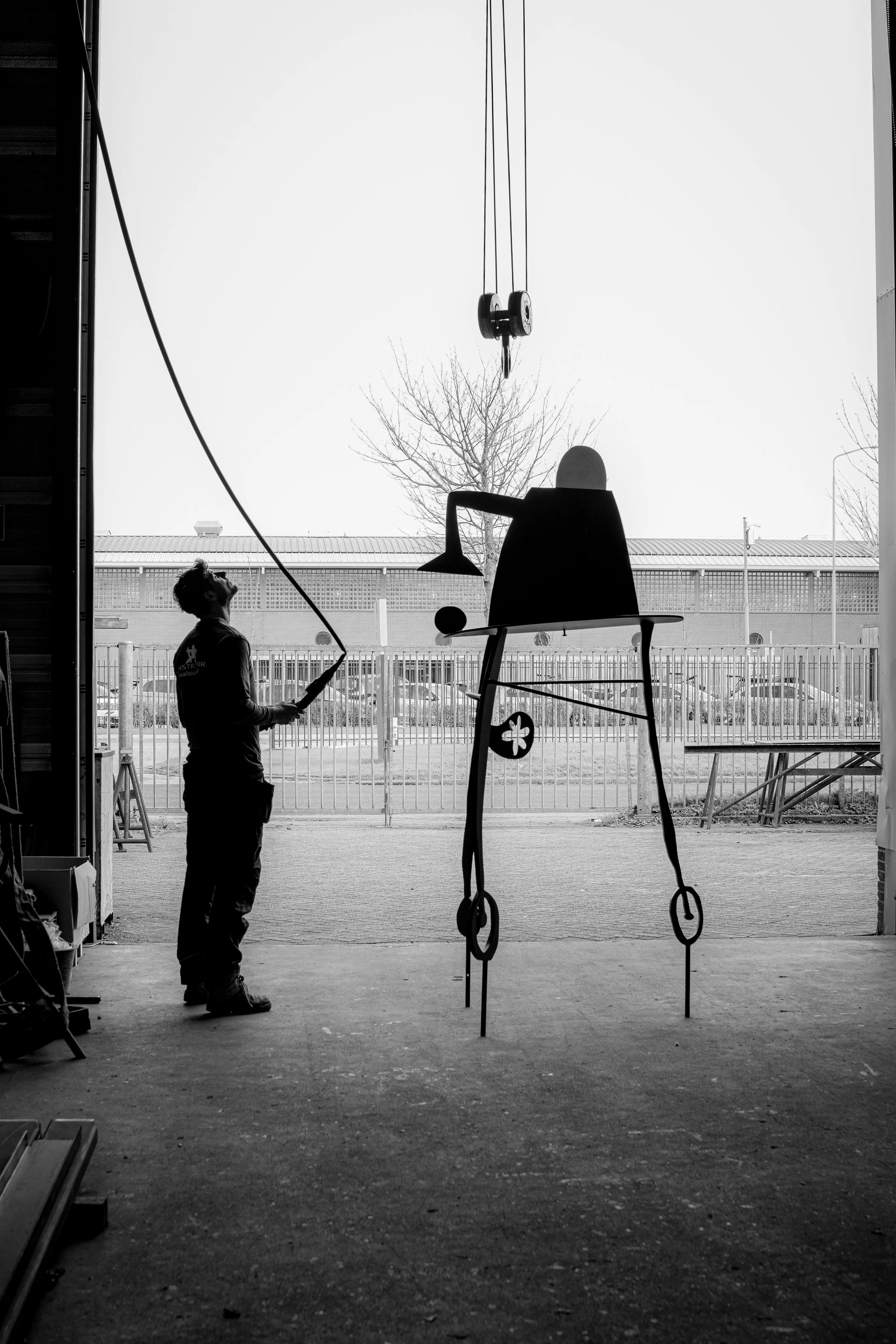
The Pearl Creator, steel sculpture by Senatori
Selwyn Senatori
The sculpture I made for Ron Blaauw’s Michelin starred restaurant is 280 cm high, with elements cut from thick steel and finished in deep black with subtle white and red accents. The process felt both magical and rough—like a ship leaving the shipyard for the first time.
Seeing it there, in a beautiful part of Amsterdam, with people walking by and engaging with it it feels exactly right. It fills the space it was meant to fill. That’s where it belongs.
Olivier Varossieau
Having built a highly recognizable visual language over decades, this shift suggests a deliberate break. How did you navigate the tension between legacy and reinvention?
Selwyn Senatori
At a certain point, repetition becomes stagnation. I felt like I had reached a ceiling. I could continue like that for decades and not be satisfied or I could challenge myself and start from zero.
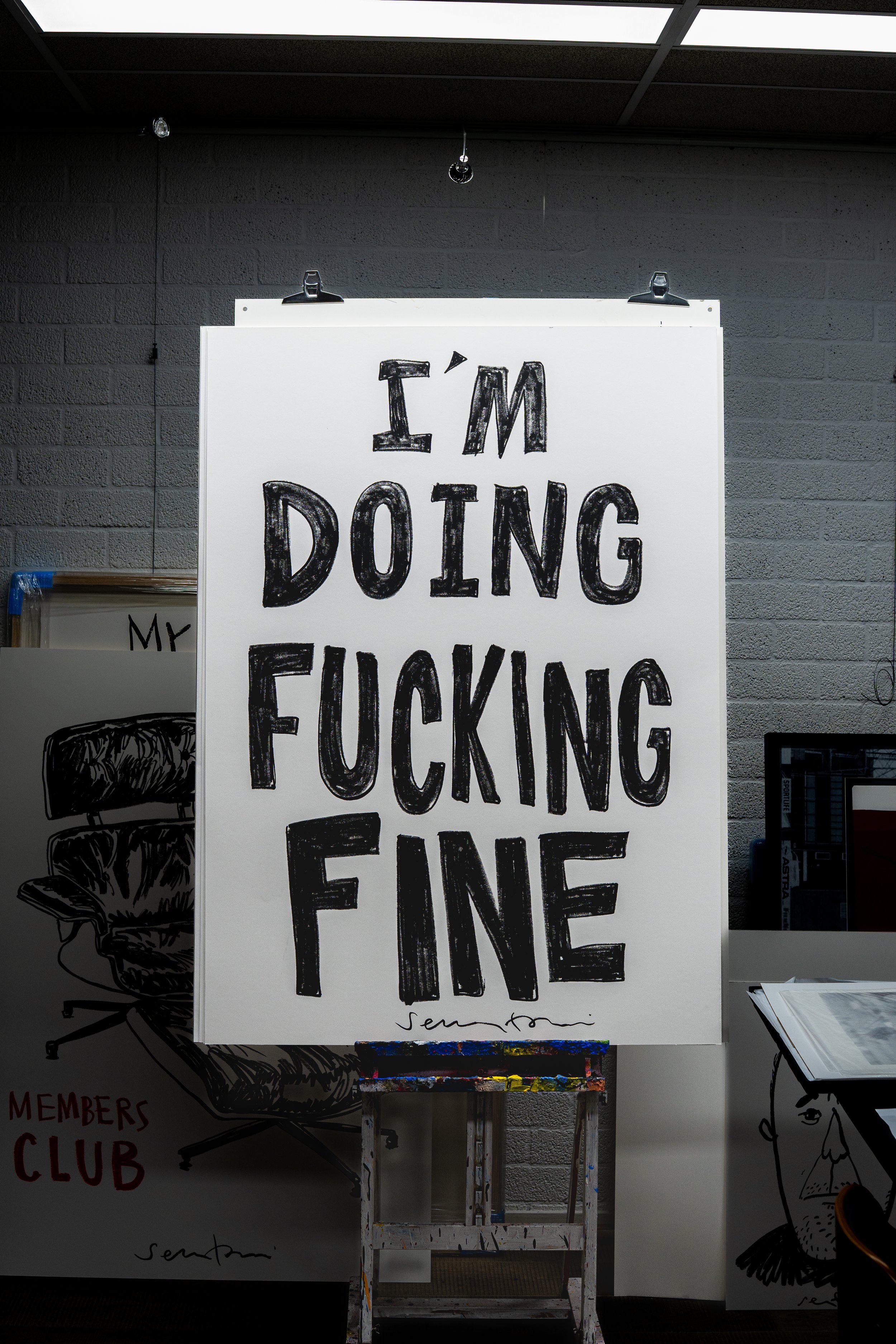
I’m doing Fucking Fine by Senatori
It was a bold move, but it didn’t feel scary. Letting go of the old narrative felt natural.
Olivier Varossieau
Your process rooted in drawing, notation, and iterative studies seems fundamental to this transition. When did these investigations begin to form a new visual language?
Selwyn Senatori
Drawing has always been there from childhood to the academy. Observing, sketching, studying forms. But during this period of research, the drawings began to simplify. They started to live their own life.
Now, they are no longer supporting elements they are the lead characters.
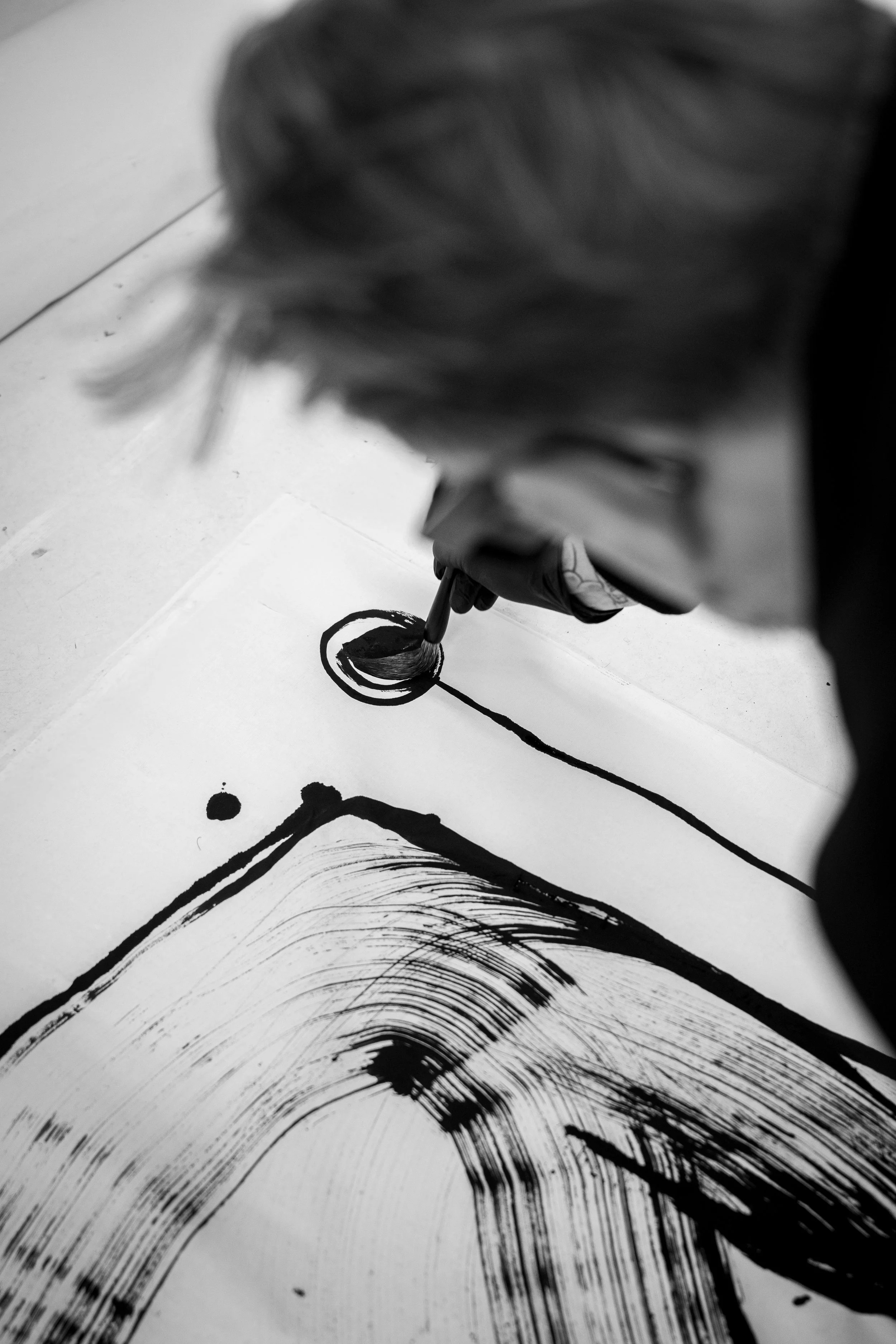
Senatori drawing
Olivier Varossieau
Do you consider this emerging language a resolved framework, or an open system?
Selwyn Senatori
It’s definitely open. I see it as a palette of shapes and forms that I keep expanding carefully. It’s never finished. There’s always something new to discover, because new situations keep arising.
Olivier Varossieau
Collectors are responding strongly to this new body of work. How do you interpret that response in relation to risk and authorship?
Selwyn Senatori
It shows that risk is good. It creates new energy, new attention, new connections. That ceiling I talked about it’s now open. I’m climbing through it.
Taking a 180 degree turn like this is one of the riskiest things I’ve done, but because it feels so natural, it already feels like a win.
Olivier Varossieau
Would you describe your current practice as reinvention, or as a deepening of long-standing concerns?
Selwyn Senatori
It’s definitely reinvention. The new works contain deeper layers—psychological, anthropological, philosophical. Questions like: Where am I in relation to others? What is my place in this universe? How do I express duality—linear and non-linear paths, life and death?
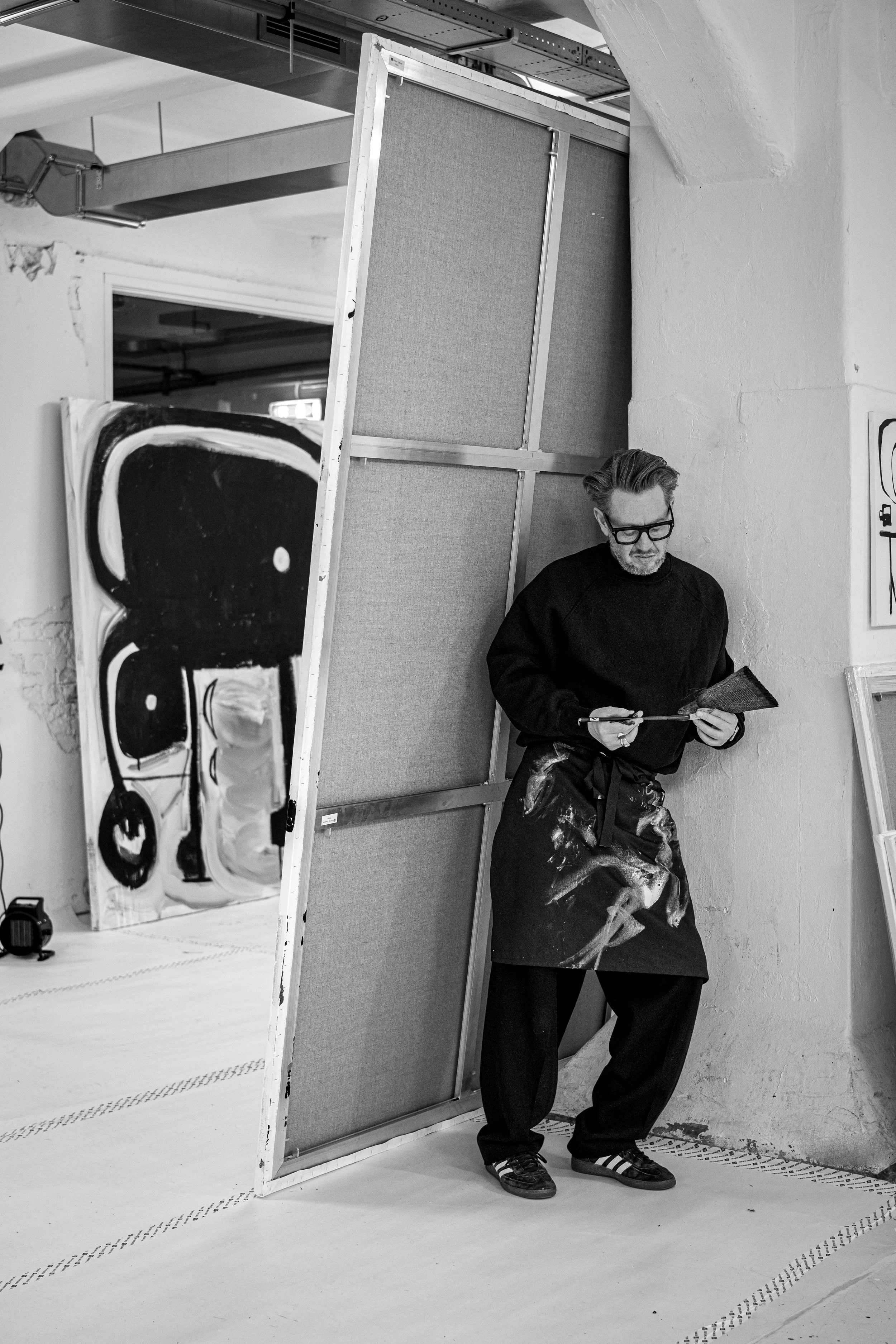
Some of the new works are larger than life.
Olivier Varossieau
Looking ahead, how do you envision the institutional life of this work?
Selwyn Senatori
The work asks for scale. It needs space to fully unfold. These pieces act like anchors like a compass. They belong on walls, but also in open environments where they can guide thought and reflection.
My ambition is simple: to keep creating every single day of my life, even when I’m 104.

Selwyn Senatori interview in his famous studio at Rokin, Amsterdam
photography Olivier Varossieau