
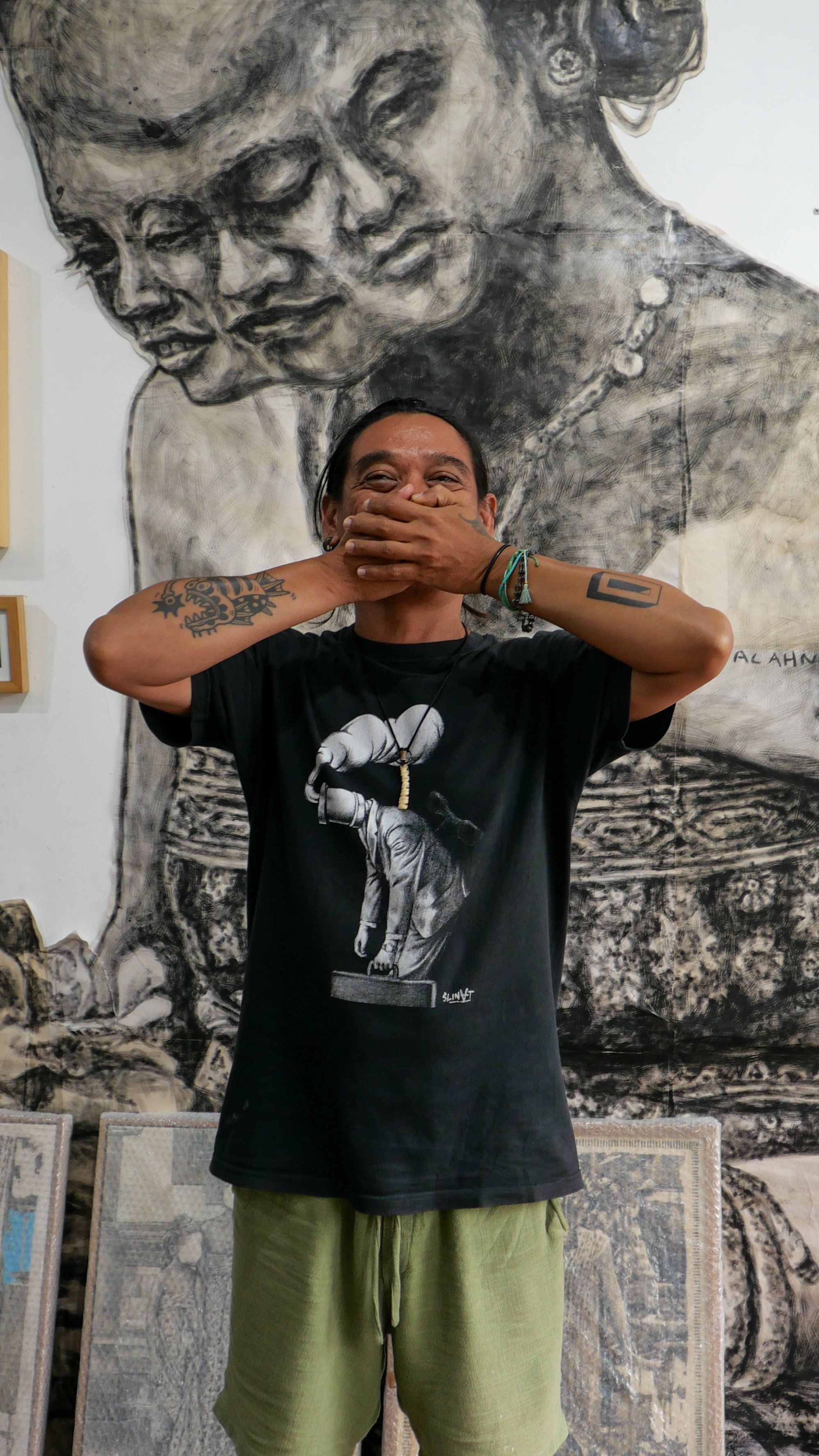
Slinat (Silly in Art) is a Balinese contemporary artist whose practice critically re-examines the visual legacy of colonialism and the construction of Bali’s global identity. Working across mural, installation, and large-scale canvas, he has developed a distinctive language rooted in archival intervention, traditional technique, and material experimentation.
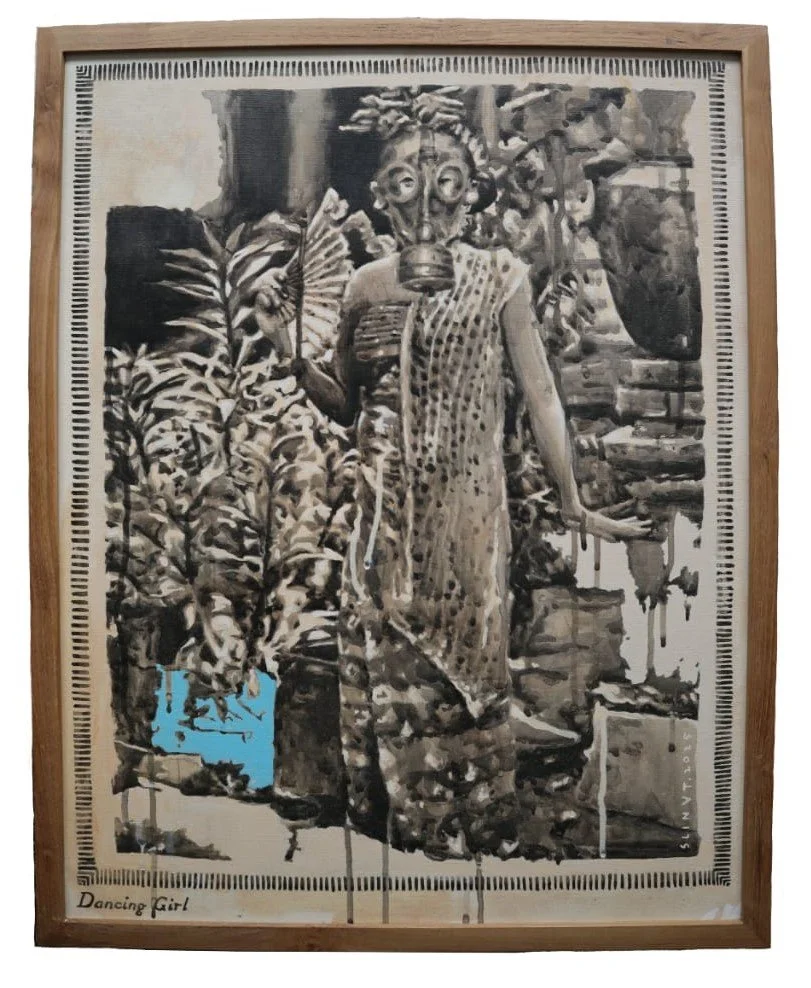
At the core of Slinat’s oeuvre is the deconstruction of Dutch colonial-era photographs of Bali. Rather than reproducing their romanticized exoticism — imagery that shaped the island’s international reputation since the early twentieth century he disrupts and reconstructs these archives to expose the complexities beneath the surface. Through this process, he addresses social inequality, environmental transformation, land displacement, and what he describes as “cultural violence” shaped by tourism and global consumption.
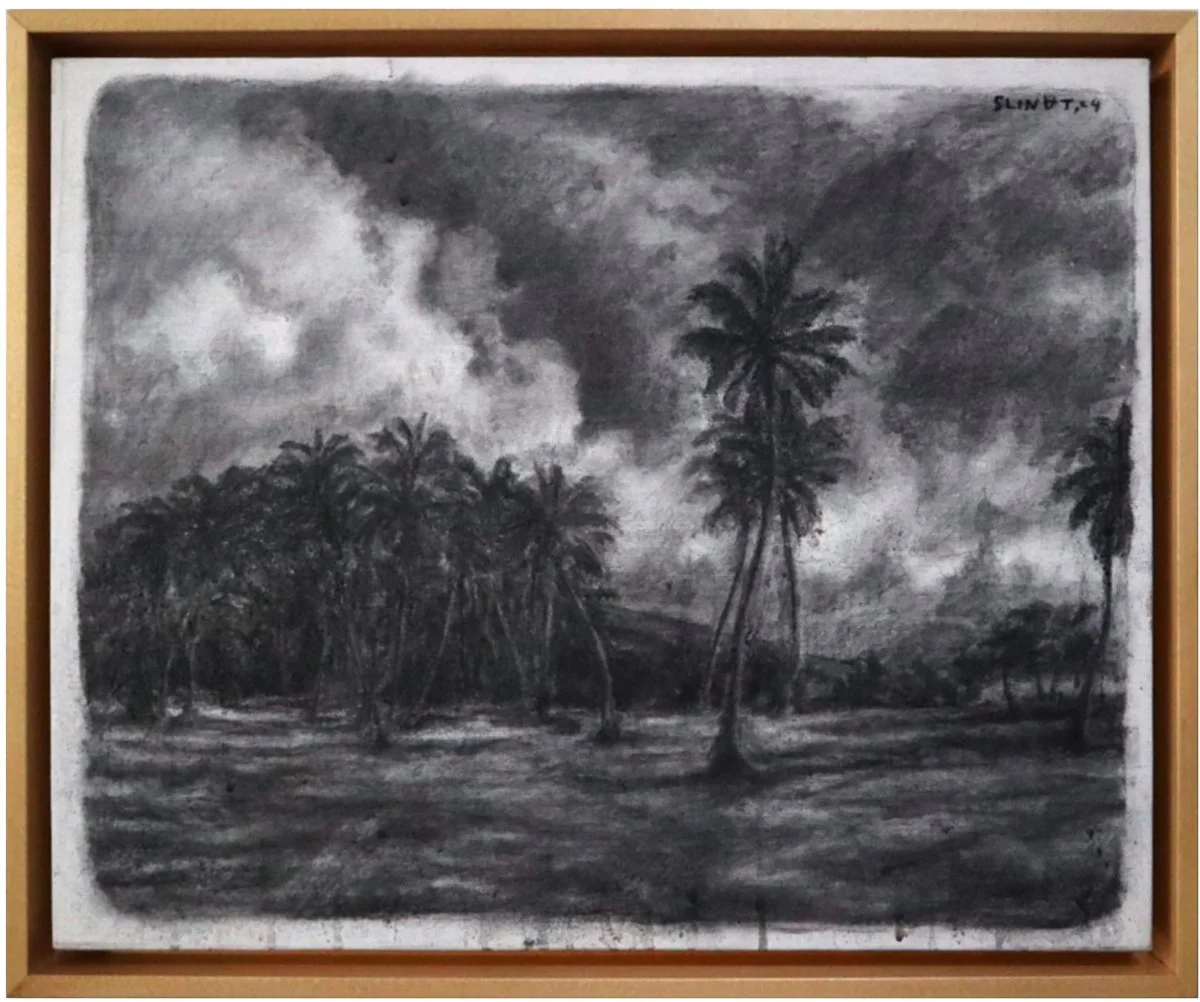
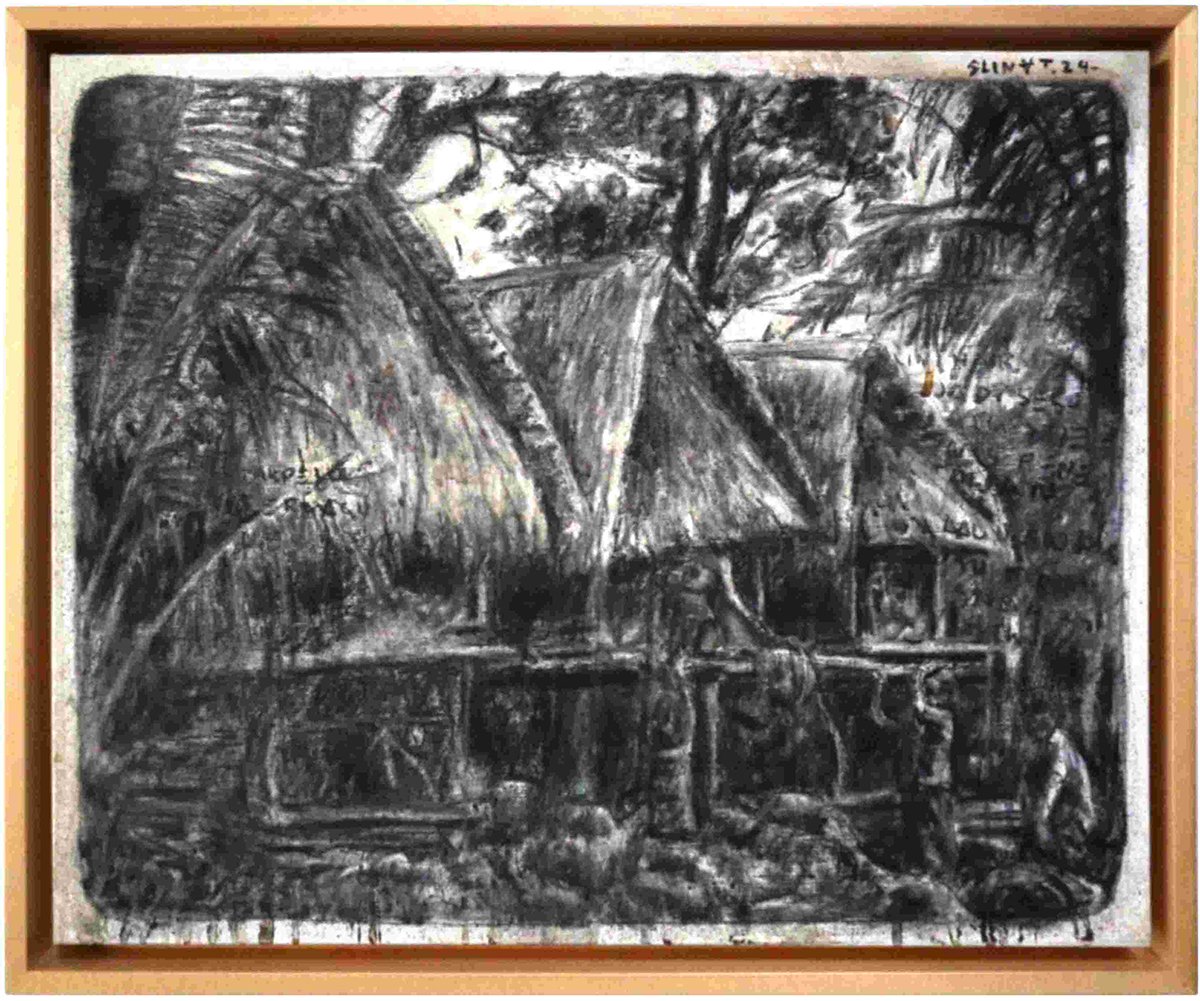
Technically, his work is deeply informed by the traditional Balinese Sigar Mangsi technique, a layered charcoal method historically used in wayang painting. By bringing this subtle, nature-based process into a contemporary critical context, Slinat creates a bridge between ritual heritage and present-day urgency. The use of charcoal derived from organic materials aligns conceptually with his themes of environmental fragility and cyclical transformation.
In addition to charcoal and tobacco extracts, Slinat frequently works with found materials — reclaimed windows, doors, metal fragments, and discarded cardboard. Rather than concealing their origin, he preserves visible traces of their previous function, allowing each object to carry its own historical narrative. This material approach reflects his awareness that every era produces its own artifacts, and that the responsibility of the present lies in shaping a more sustainable future.
Human figures — often appropriated from archival photographs and altered with masks or distortions — appear suspended between beauty and discomfort. They embody the tension between inherited identity and contemporary economic realities, between ceremonial continuity and the demands of mass tourism.
Slinat has exhibited in Bali, Australia, Europe, and the United States. His work resonates with collectors and institutions seeking art that combines strong aesthetic presence with critical depth and long-term cultural relevance. As Bali undergoes rapid transformation, his body of work stands as both visual testimony and reflective archive — a layered narrative of an island negotiating its past, present, and future.
Slinat
AVAILABLE ARTWORKS
INTERVIEW
ARTICLES
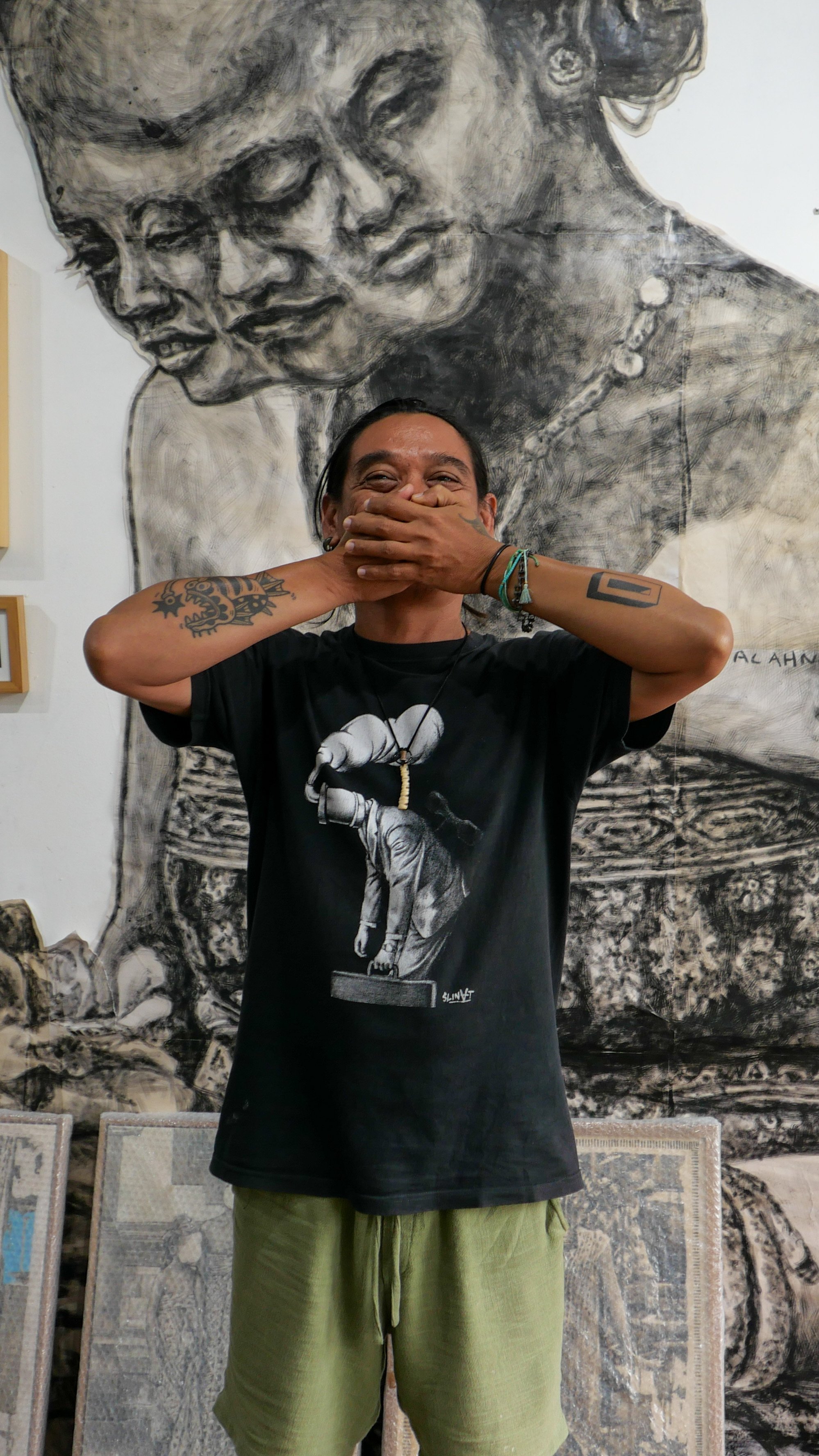
Medium: Charcoal, Ink, Tobacco On Canvas
Size: 142×103cm
Location: Bali
Year: 2025