Hot Art Bali: Slinat (Silly in Art) “Rewriting Bali’s Colonial Image”
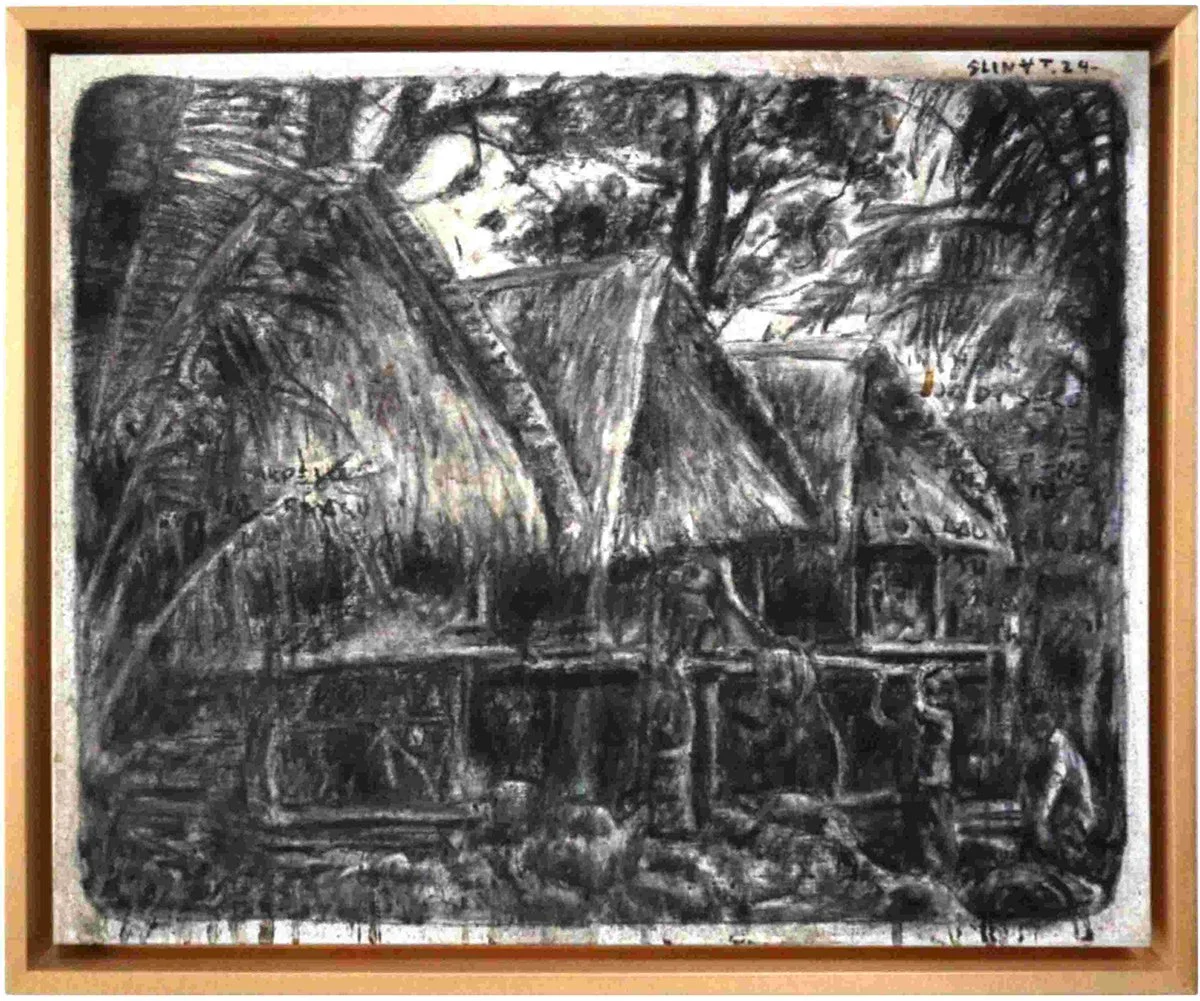
“Goodbye Padi, welcome Lambung” Slinat
Balinese artist Slinat (Silly in Art) builds a powerful contemporary practice from the fragile surface of historical memory. Working with archival photographs from the Dutch colonial period in Bali, he does not reproduce nostalgia, he dismantles it.
Colonial imagery has long shaped the romantic narrative of Bali, particularly since the 1920s “Bali Seering” tourism agenda. These images, widely circulated, formed the foundation of the island’s exotic identity. Slinat intervenes directly into this visual history. Through layered charcoal, tobacco extracts, and found materials such as reclaimed windows, doors, metal and cardboard, he reconstructs the past from a position of equality, environmental urgency, and cultural tension.
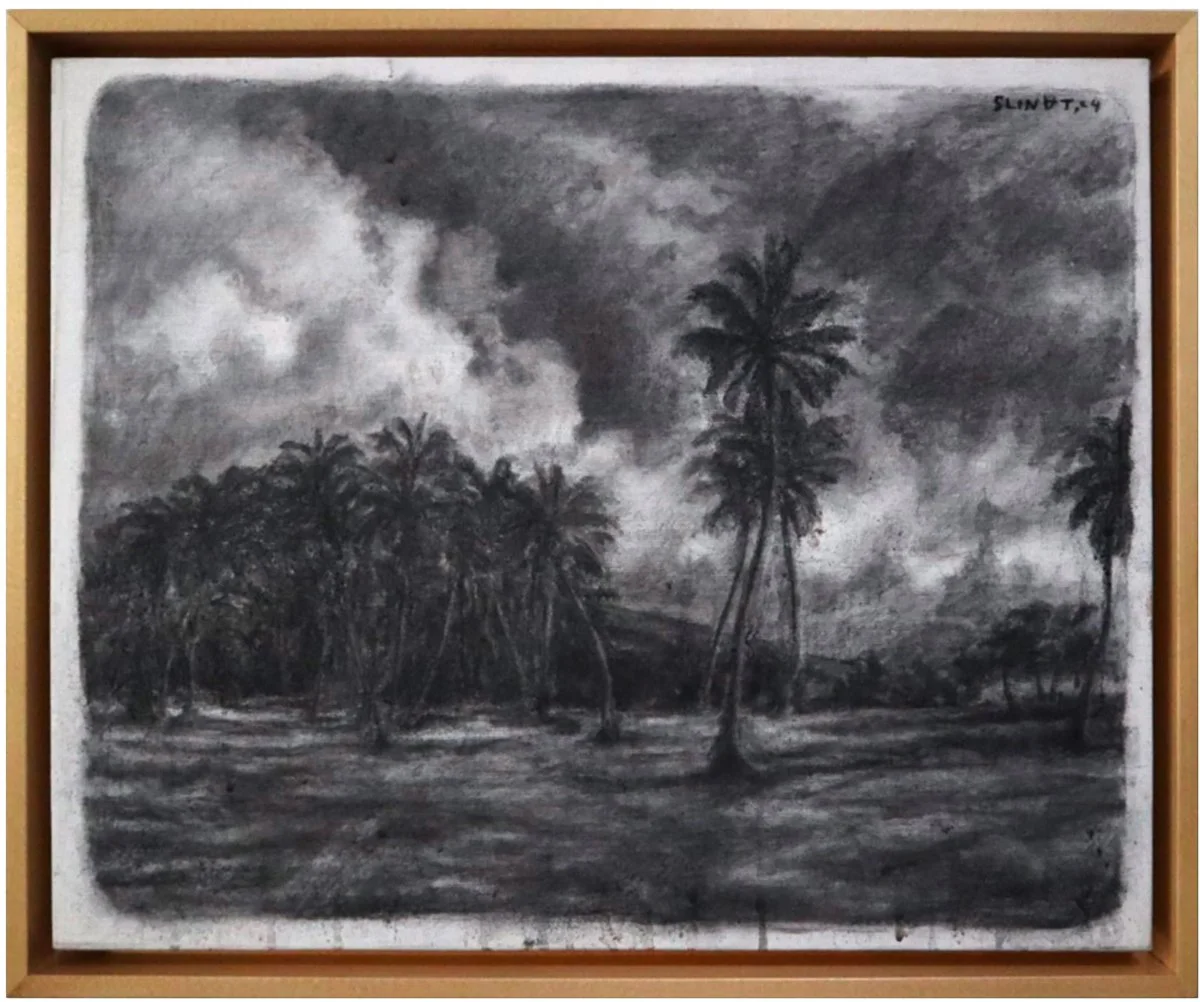
“Grey landscape”, Slinat
His practice is deeply rooted in the Balinese traditional Sigar Mangsi technique a layered charcoal method historically used in Wayang painting. By embedding this ancestral method within a critical contemporary narrative, Slinat bridges ritual and resistance, tradition and transformation.
In works such as Gray Landscape and Goodbye Padi Welcome Lumbung, landscapes darken and become fragile. Rice barns turn into villas. Open fields become construction sites. The exotic image fractures, revealing social inequality, environmental degradation, and what the artist calls “cultural violence” shaped by tourism.
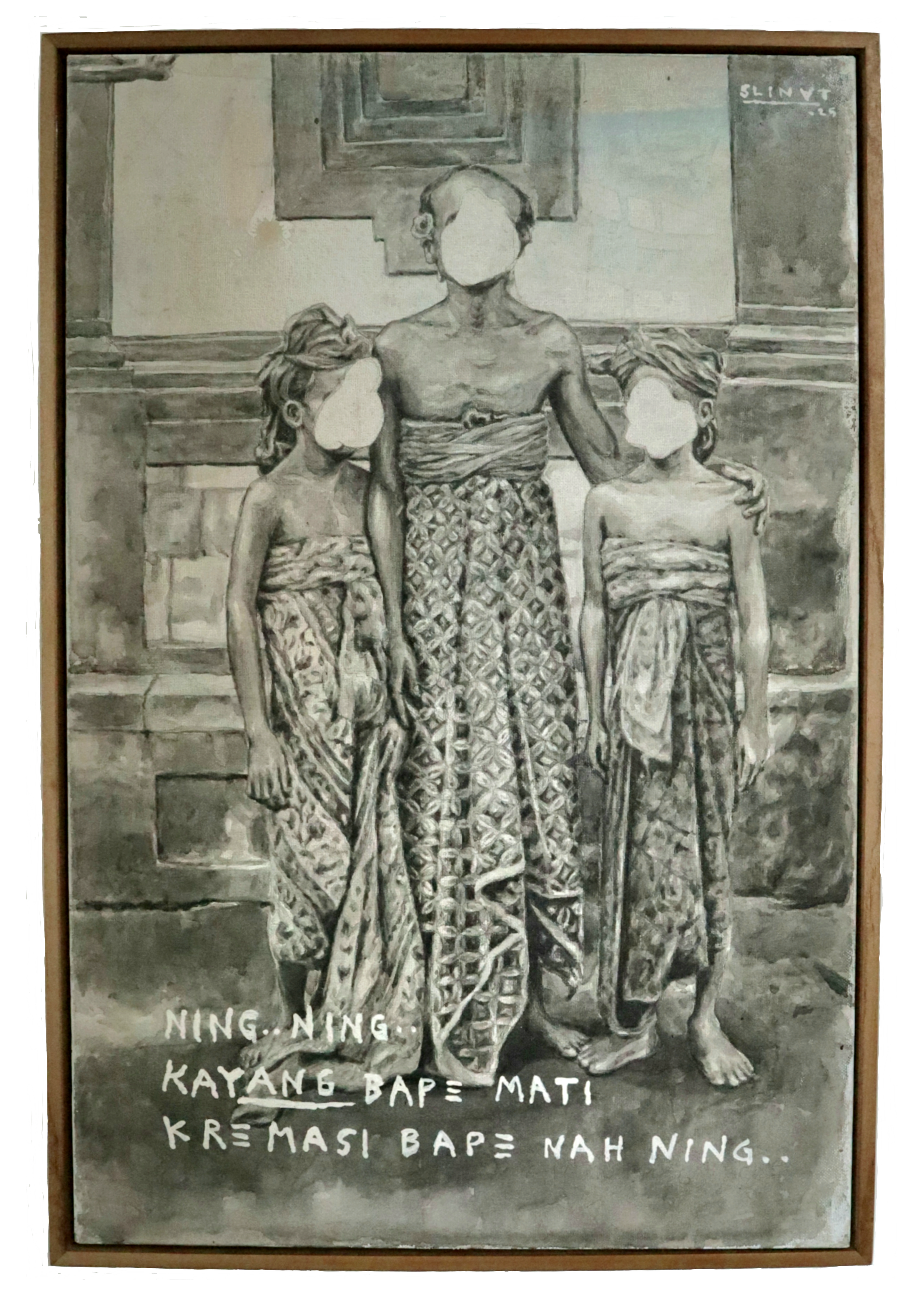
“Grow them before they grow”, Slinat
Human figures often derived from colonial era photographs appear masked, distorted, suspended between beauty and suffocation. They embody the friction between identity and global consumption.
Slinat’s work has been exhibited across Bali, Australia, Europe and the United States. For collectors, his oeuvre represents not only aesthetic depth, but a historical document of Bali’s transformation — a visual archive of an island negotiating its future.
Mendekonstruksi Citra Kolonial Bali
Seniman Bali Slinat (Silly in Art) membangun praktik kontemporer yang kuat dari lapisan sejarah visual Bali. Ia tidak sekadar menampilkan kembali foto arsip era kolonial Belanda ia membongkar dan menyusunnya ulang.
Sejak agenda pariwisata tahun 1920an, citra Bali dibentuk melalui romantisme eksotik. Slinat menghadirkan sudut pandang berbeda: kesetaraan, persoalan lingkungan, dan ketegangan kebudayaan yang kini menjadi realitas sehari-hari.
Melalui teknik tradisional Sigar Mangsi, tinta arang, ekstrak tembakau, serta penggunaan material temuan seperti jendela, pintu, logam dan kardus bekas, ia menjembatani tradisi dan kritik kontemporer.
Karya karya seperti Gray Landscape dan Goodbye Padi Welcome Lumbung menggambarkan perubahan fungsi lanskap Bali sawah menjadi bangunan, lumbung menjadi vila. Figur manusia bertopeng menghadirkan gesekan antara identitas lokal dan konsumsi global.
Karya Slinat telah dipamerkan di Bali, Australia, Eropa, dan Amerika Serikat. Bagi kolektor, praktiknya menjadi arsip visual atas transformasi Bali yang berlangsung sangat cepat.