A Conversation with Olivier Varossieau
From Graffiti’s Underground Origins to International Art Advisory
For more than two decades, Olivier Varossieau has been immersed in the international art world. As co-founder of Vroom & Varossieau, he has advised private collectors, curated exhibitions, collaborated with museums, and helped shape the recognition of urban contemporary art long before it entered the mainstream.
In this conversation, he reflects on the early days of graffiti and street art, the evolution of the market, and the philosophy that continues to guide Vroom & Varossieau today.
“When we started more than twenty years ago, street art wasn’t a market, it was a movement.”
How did your journey into the art world begin?
“When I started in the art world more than twenty years ago, our focus was on old-school graffiti and the emerging street art movement. At the time, there was very little commercial interest in this world. Most artists were still painting illegally, often at night, driven by creativity rather than career opportunities.
That was exactly what made the movement so exciting. It wasn’t created for galleries or social media. It was authentic, experimental and constantly evolving. Every city seemed to produce remarkable new talent, each with a distinct visual language and perspective.
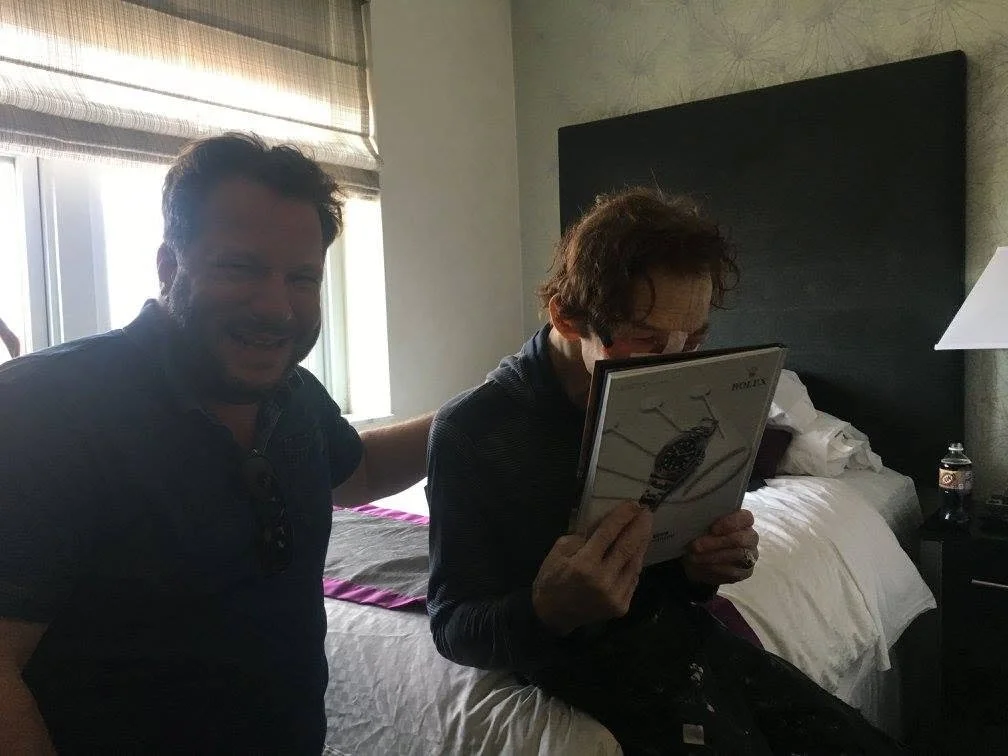
Olivier Varossieau and Richard Hambleton in NYC.
We had the privilege of working with many artists who would later become internationally recognised. Among them were Banksy, D*Face, Vhils, The London Police, Ben Eine, Slinkachu, Bordalo II, ELLE, Faile, Richard Hambleton and many others who helped redefine contemporary urban art.
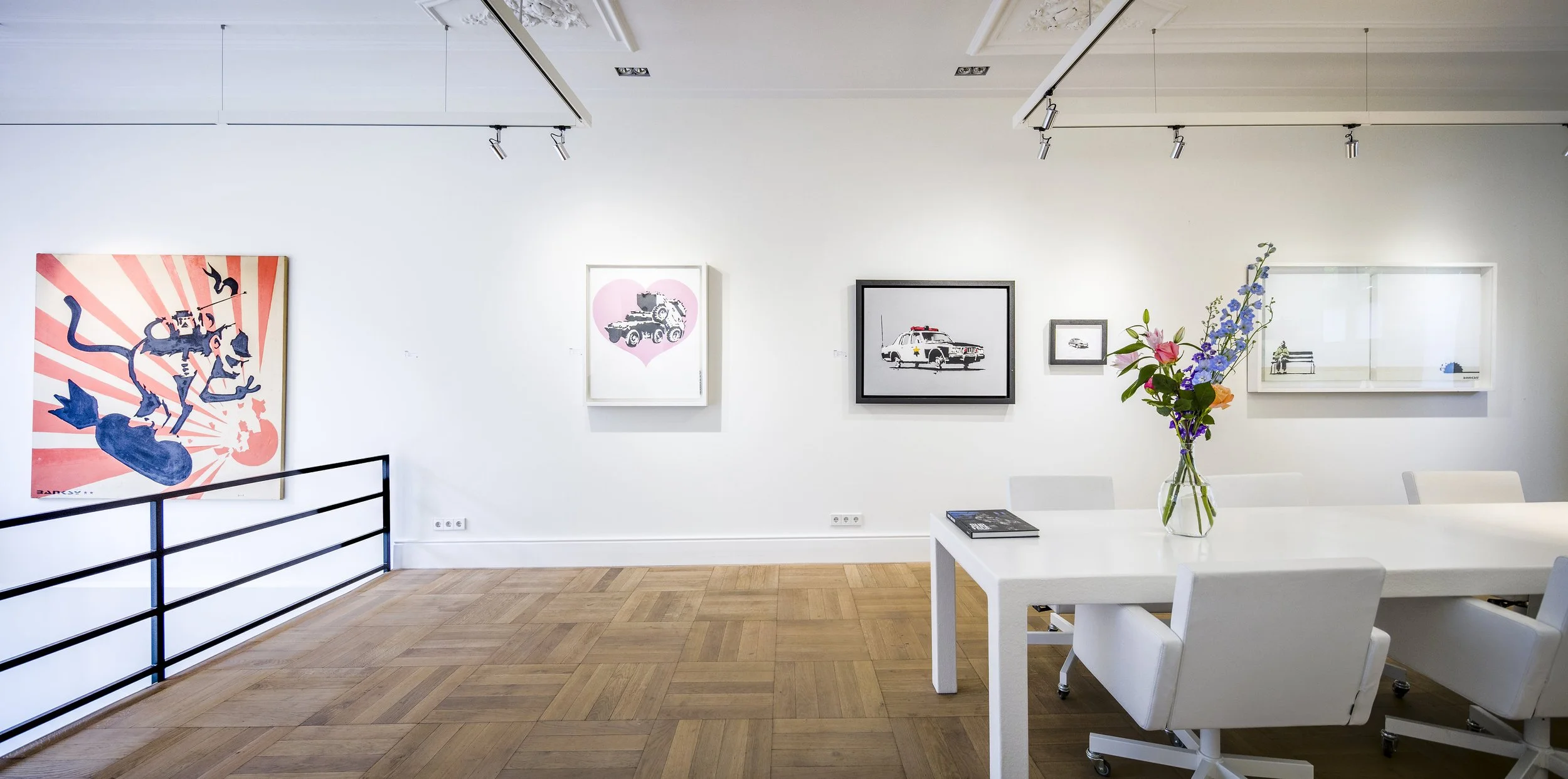
Banksy artworks at Vroom & Varossieau Gallery
We were also proud to be the first gallery in the Netherlands to offer original works by Banksy, at a time when very few people could have predicted the extraordinary impact he would have on the global art market.”
“The most exciting artists have always been inventors.”
How have you seen the urban art movement evolve over the years?
“The early years were defined by experimentation. Artists were constantly searching for new ways to communicate, often without permission and without commercial expectations. Innovation wasn’t a strategy—it was simply part of the culture.
Around the middle of the 2010s, the landscape began to change. Public mural projects became increasingly commissioned by municipalities, developers and companies. Murals were no longer created solely through spontaneous artistic intervention; they often involved permits, budgets, production teams and large-scale equipment.
That development brought greater public appreciation for urban art, which is undoubtedly positive. At the same time, I believe something else happened.
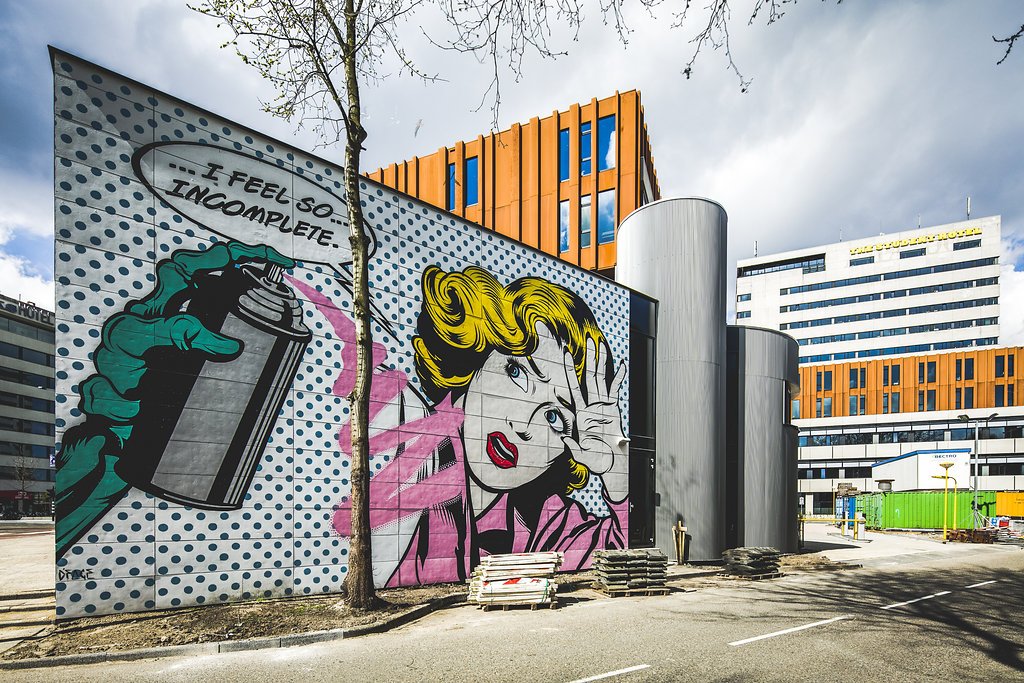
D*Face commission at The social Hub Amsterdam
Many of the pioneering artists who had shaped the movement started looking beyond the wall. They expanded into sculpture, installation, painting, public interventions and multidisciplinary practices. They remained innovators because they continued to challenge themselves rather than repeating a successful formula.
Personally, I distinguish between artists who use public space as a platform for artistic ideas and those who primarily create decorative murals. Both have their place, but our own interest has always been in projects that contribute something meaningful, challenge expectations or leave a lasting cultural impact.”
“A wall is only one possible medium.”
How does that philosophy influence the projects you accept today?
“We still enjoy developing public art commissions for municipalities, companies and private collectors, but we are selective.
We are most interested in projects that give artists the freedom to create something ambitious and original. That might be a mural, but it could just as easily be a sculpture, an installation or another form of public artwork that responds to its environment in an unexpected way.
We generally avoid purely decorative commissions where the primary objective is simply to fill a wall. We believe the strongest public art tells a story, creates dialogue and continues to resonate long after it has been completed.”
“Collecting also means preserving cultural history.”
Your work extends beyond galleries and collectors. Can you tell us about that?
“One aspect of our work that is especially meaningful is helping to preserve important works and stories within urban contemporary art.
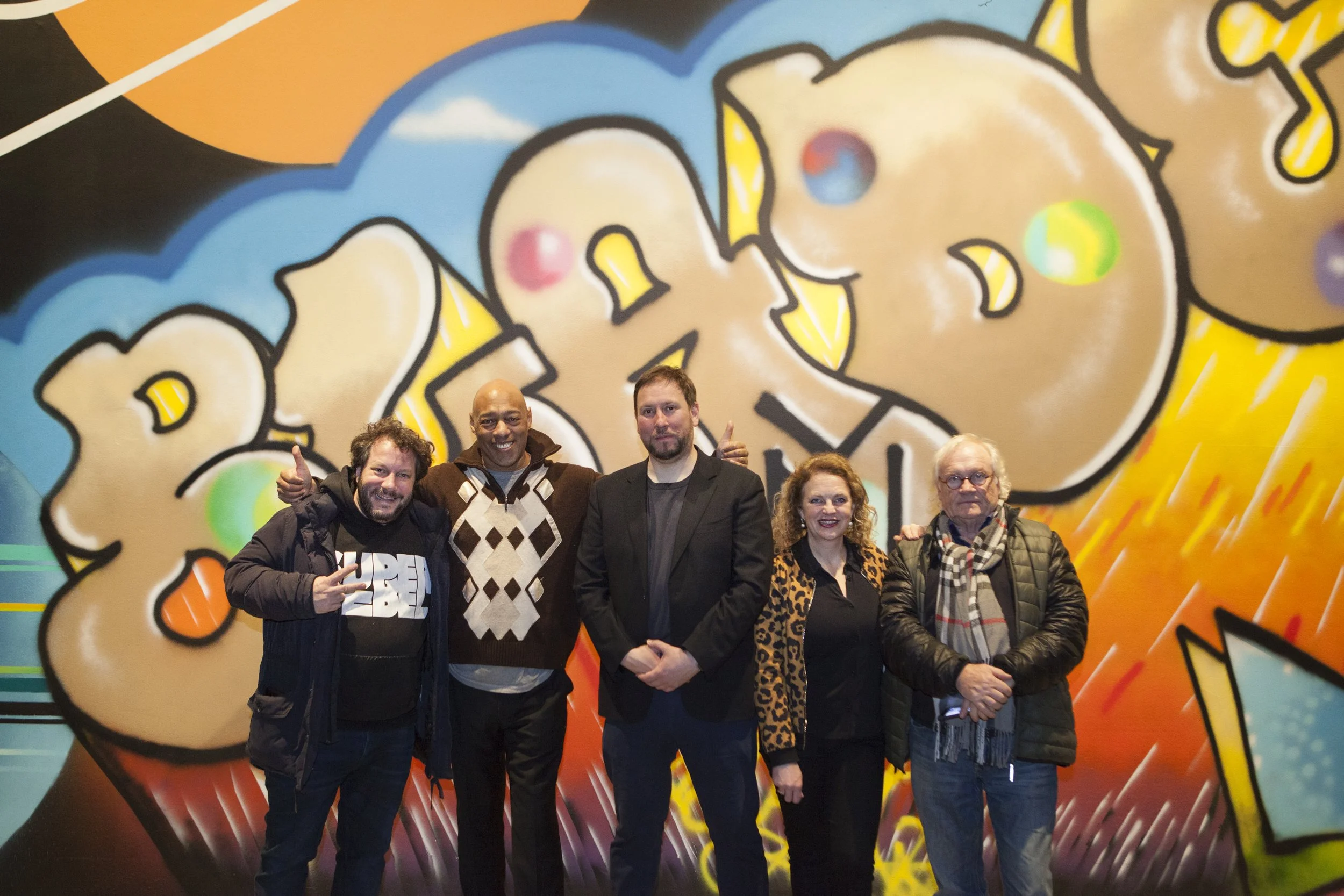
Olivier Varossieau, Blade (Steve Ogburn), Paavo Arhinmäki(Minister of Culture of Finland), Mick La Rock and Vincent Vlasblom at HAM Museum Helsinki, Finland
Over the years we have contributed as collectors, curators and co-organisers to several significant museum exhibitions dedicated to graffiti and street art. We also advise museums and exhibition organisers on artists, historical context and collections, and regularly facilitate loans from the Vroom & Varossieau Collection as well as from other important private collections.
We believe collectors have a responsibility that goes beyond ownership. They are temporary custodians of cultural heritage.”
“Some projects become part of history.”
Looking back, which projects stand out?
“There are several that remain particularly significant.
In 2014 we were involved in the organisation of the Guinness World Record for the world’s longest graffiti scroll in Dubai, bringing together more than 150 artists, including pioneers such as Futura, Blade and Inkie. It was an extraordinary moment that celebrated the global graffiti community.
Keith Haring Sea Monster mural in Amsterdam, video by German Rigol
Closer to home, we played an important role in the initiative to preserve Keith Haring’s monumental mural in Amsterdam. Seeing that work protected for future generations is something we remain incredibly proud of.
We’ve also curated and commissioned projects for hotels, hospitality venues, restaurants and commercial spaces, including The Student Hotel ,now The Social Hub, in Amsterdam and Florence, as well as the street art-inspired concept bar De Bajes in Amsterdam. Each project sought to create environments where contemporary art became an integral part of the visitor experience rather than an afterthought.”
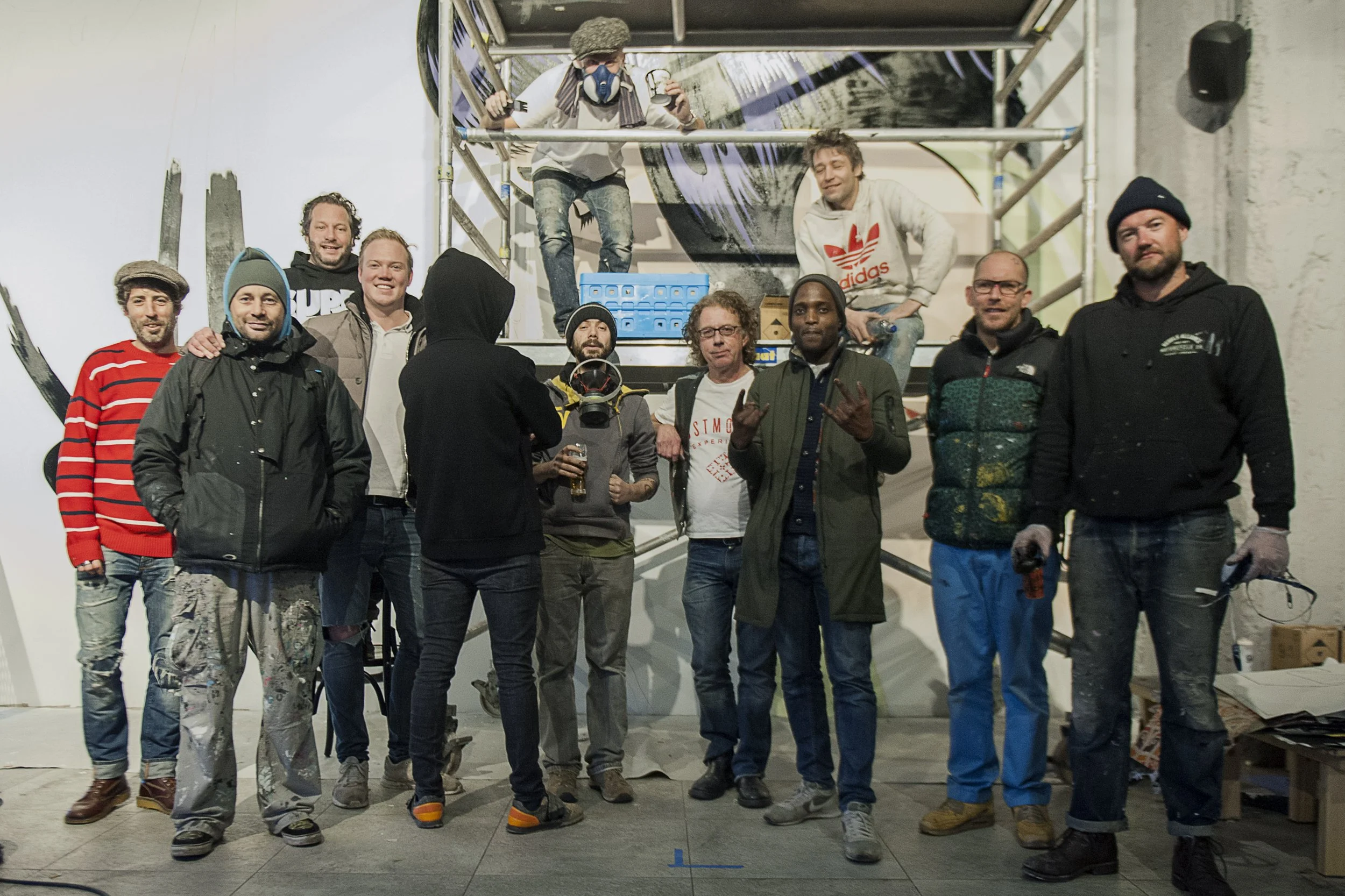
Bortusk Leer, Chaz(The London Police, Olivier Varossieau, Sven Touring, Laser 3.14, Jaune, Hugo Kaagman, EINE, D*FACE, Ernst de Keizer at “De Bajes” in Amsterdam. Photography Henk Warrink.
“Art advisory is about relationships, not transactions.”
How has that journey shaped Vroom & Varossieau today?
“Although our work has expanded into blue-chip contemporary art, secondary market acquisitions and international art advisory, the principles remain the same.
We have always believed in identifying exceptional artists before the wider market recognises them, building long-term relationships based on trust, and helping collectors acquire works that have lasting artistic and cultural significance.
Markets change. Trends come and go. Authenticity, knowledge and integrity endure.
That philosophy continues to define everything we do at Vroom & Varossieau.”