Keith Haring’s Sea Monster in Amsterdam: From Hidden Masterpiece to Protected Monument
Drone video by German Rigol
By Olivier Varossieau, Vroom & Varossieau Gallery
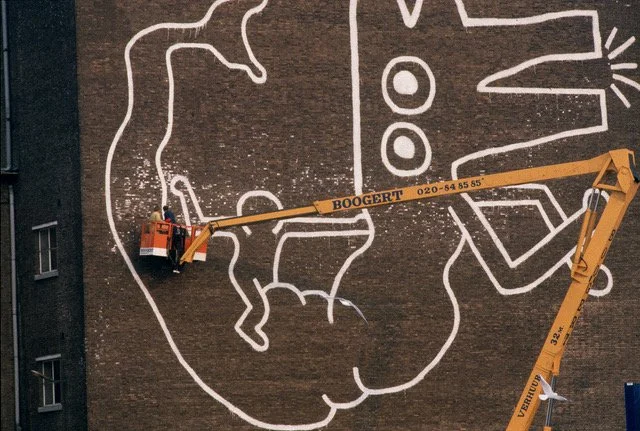
Keith Haring painting the Sea Monster, photography by Patricia Steur
In March 1986, American artist Keith Haring arrived in Amsterdam for his first major solo exhibition at the Stedelijk Museum. During his stay, he created what would become one of the most important public artworks in the Netherlands: the monumental Sea Monster mural on the exterior wall of the museum’s former storage facility on the Jan van Galenstraat.
Today, nearly forty years later, the mural is recognized as one of the largest surviving Keith Haring murals in Europe and one of only a handful of his public works still visible worldwide. Yet for almost three decades, the artwork remained hidden behind aluminum cladding, forgotten by most of the city.
Its rediscovery, restoration and preservation became an extraordinary international effort involving the Keith Haring Foundation, conservators Antonio Rava and Will Shank, graffiti pioneer Mick La Rock, Vroom & Varossieau Gallery, Ballast Nedam, the Stedelijk Museum and many others who believed that this unique artwork deserved a future.
This is the story of how Amsterdam’s Keith Haring mural was saved.
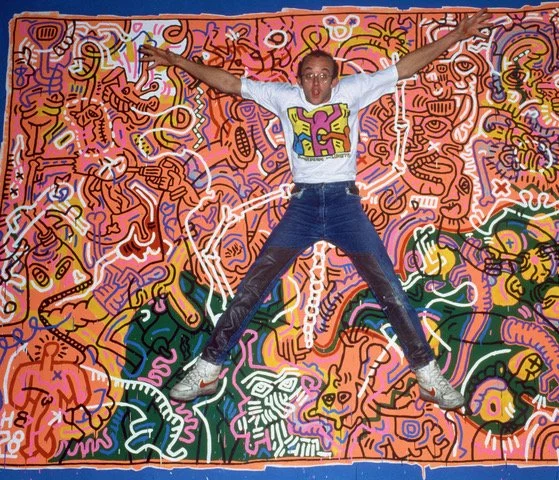
Keith Haring at the Stedelijk Museum Amsterdam, photography by Patricia Steur
Keith Haring Comes to Amsterdam
When Keith Haring visited Amsterdam in 1986, he was already one of the most influential artists of his generation. His work had transformed the visual language of contemporary art, bringing elements of graffiti, street culture and activism into museums and public spaces around the world.
Alongside his exhibition at the Stedelijk Museum, Haring asked if there was a wall available where he could leave a public work behind for the city.
The museum offered him the exterior wall of its storage building along the Jan van Galenstraat.
Photographer Patricia Steur was present that day and documented the entire process.
Looking back nearly forty years later, she still remembers her amazement at the scale of the project.
“The project seemed almost impossible. I had no idea how he could work from so close and still understand where he was going with his paintbrush on such a huge space.”
Working from an aerial lift, Haring painted directly onto the brick wall. There were no projections, no elaborate preparations and no visible grid system.
Steur remembers Haring as completely focused and remarkably efficient.
“He knew exactly what he wanted and how he wanted it. He was focused, fast, playful, serious and incredibly patient.”
The mural was completed in a single day.
At more than twelve meters high and stretching across the industrial facade, the mural depicted a hybrid creature, part dog and part fish, carrying one of Haring’s iconic radiant figures.
What became known as the Sea Monster instantly transformed an ordinary warehouse wall into a public artwork of international significance.
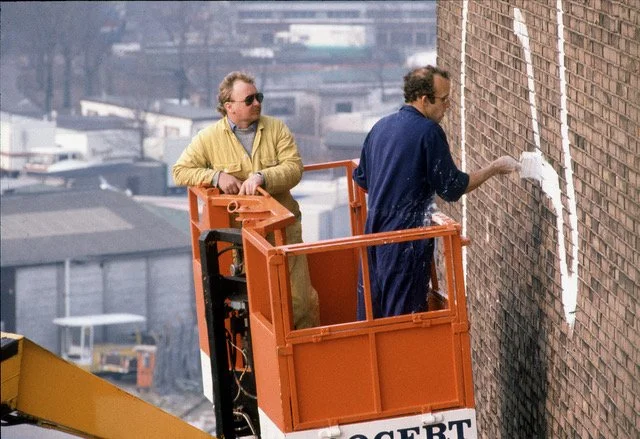
Keith Haring painting the mural in Amsterdam, photography by Patricia Steur
Hidden Behind Cladding
Only a few years after its creation, the mural disappeared.
In 1989, after the Stedelijk Museum vacated the building, the structure was converted into a refrigerated storage facility. To insulate the building, aluminum cladding was installed over the exterior walls.
The mural vanished completely from public view.
For nearly thirty years, few people knew the artwork still existed behind the panels.
Among those who never forgot about it was Julia Gruen, Executive Director of the Keith Haring Foundation in New York.
Gruen had already become involved in preserving several important Keith Haring murals around the world, including projects in Pisa and Paris. Knowing the Amsterdam mural still existed beneath the cladding, she repeatedly reached out to institutions in Amsterdam seeking information and support.
Unfortunately, those efforts initially received little response.
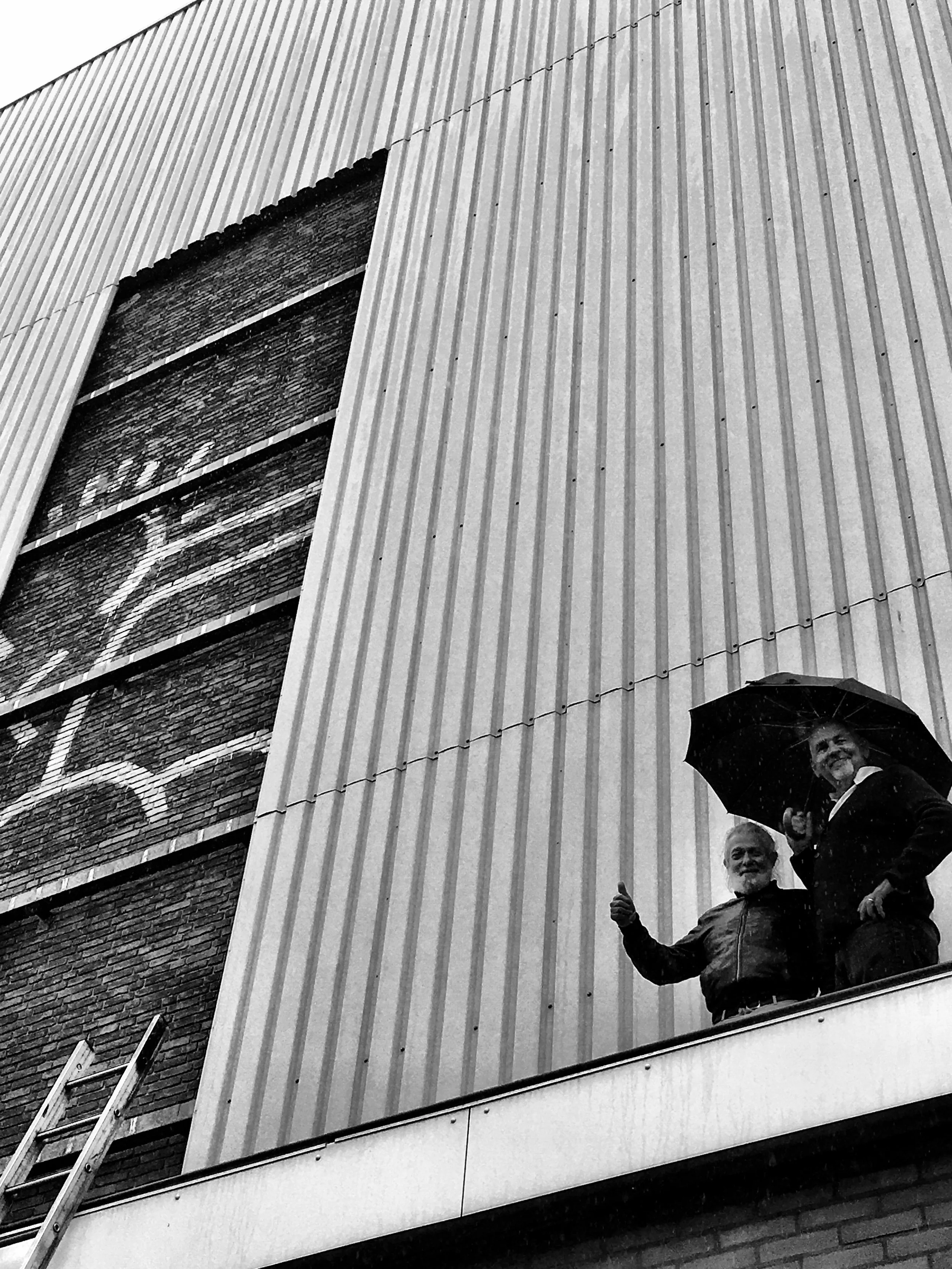
Antonio Rava and Will Shank at the unveiling of the mural, photography Olivier Varossieau
Rediscovering the Sea Monster
In 2014, Amsterdam graffiti pioneer Aileen Middel, better known as Mick La Rock, came across an article discussing the hidden mural. Although she remembered the mural from her youth, she had not thought about it for years.Curious, she cycled to the Jan van Galenstraat to see the building for herself. The cladding was still there.The mural, she realized, could still be underneath.Her reasoning was simple.
“It is a Keith Haring. Keith Haring is gone. He is never going to make another mural. If this one is still there, it deserves to be saved.”
At the time, she had no roadmap and no institutional support. That would soon change. While guest-curating the exhibition Graffiti: New York Meets The Dam for the Amsterdam Museum, Mick received an email from Julia Gruen asking once again about the mural’s status. This time, there was a response. The search for Amsterdam’s hidden Keith Haring had finally begun.
Building an International Team
Recognizing the importance of the mural, Mick La Rock approached Olivier Varossieau of Vroom & Varossieau Gallery. For Varossieau, the significance of the project was immediately obvious.
“During our career in the art world we have always been interested and active in graffiti and street art. Given the stature of Keith Haring, it was a no-brainer. The work was still there, covered by cladding, and we felt it had to be brought back for the public and future generations to enjoy.”
Together, Mick La Rock, Olivier Varossieau and Isabelle Vroom began building a coalition around the project.
Meetings were organized with Julia Gruen and the Keith Haring Foundation. Isabelle Vroom and Mick La Rock traveled to Milan during the major retrospective exhibition Keith Haring: About Art at Palazzo Reale to meet Gruen and discuss possibilities for Amsterdam.
Soon afterwards, Mick and Olivier attended the unveiling of Haring’s restored Tower mural in Paris, where they met internationally renowned conservators Antonio Rava and Will Shank.
Those meetings would prove decisive.
“We wanted to build the strongest possible team,” Varossieau recalls. “Antonio and Will had already restored much more complicated Keith Haring projects. Once we met them, we knew the Amsterdam mural could be saved.”
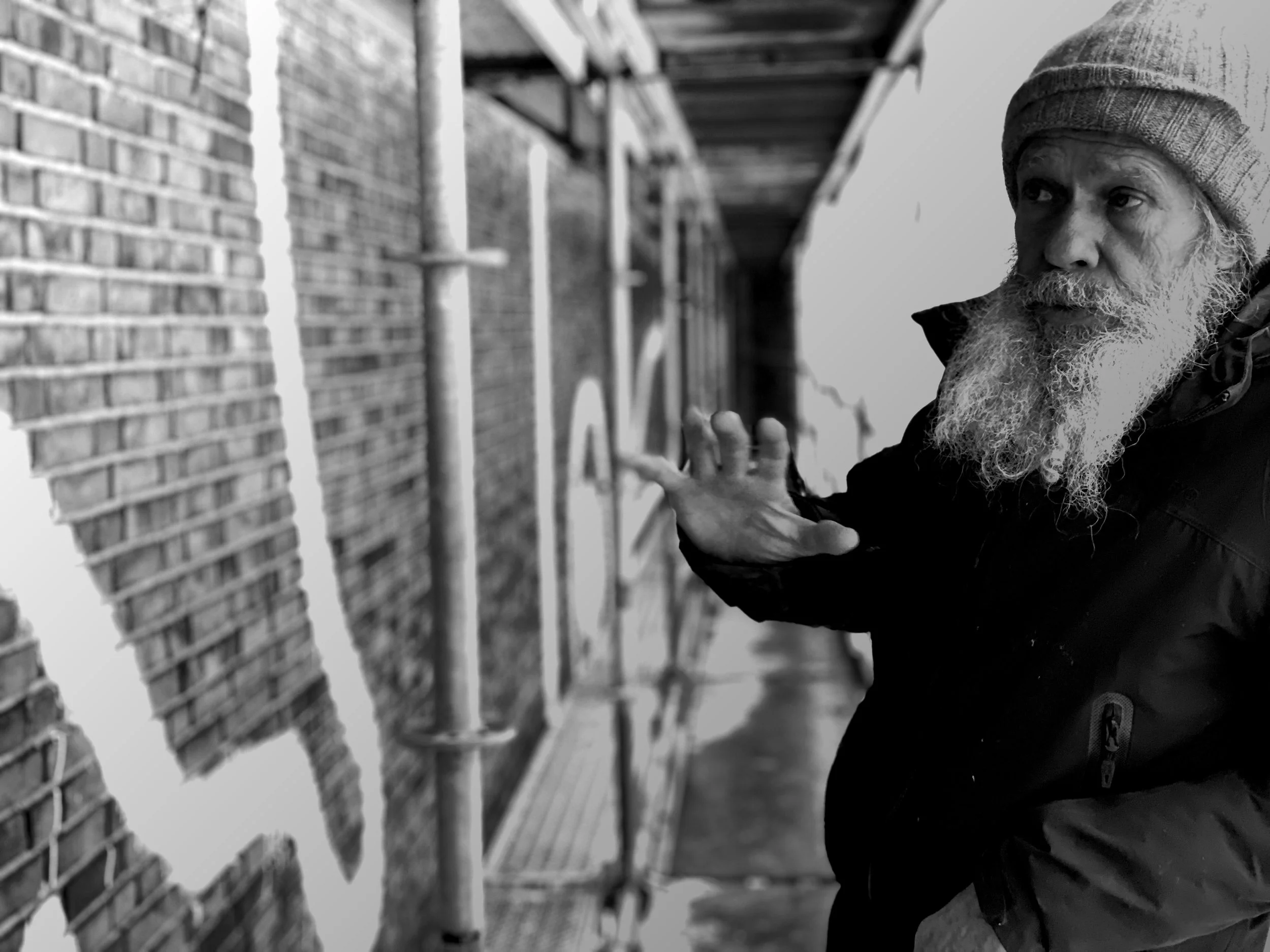
Antonio Rava explaining the work done at the mural, photography Olivier Varossieau
Antonio Rava and the Conservation Effort
Few people in the world have dedicated as much time to preserving Keith Haring’s public artworks as Italian conservator Antonio Rava.
Trained at Rome’s prestigious Istituto Centrale del Restauro and later at New York University, Rava has worked on major conservation projects ranging from Renaissance masterpieces to some of the world’s most important contemporary artworks.
Together with longtime colleague Will Shank, he had already conserved Keith Haring murals in Pisa, Paris and Melbourne.
When the cladding was finally removed in Amsterdam, their expertise became essential.
The mural had survived remarkably well, but decades behind the aluminum panels had left visible damage. Paint was flaking in places, rust stains had developed and moisture-related issues were beginning to affect the wall.
The conservation team carried out extensive research, sampling and condition assessments before beginning a meticulous restoration campaign.
Months of work followed.
Without the expertise of Antonio Rava and Will Shank, the mural’s long-term preservation would not have been possible.
A dedicated interview with Antonio Rava about the restoration process and the conservation of Keith Haring’s murals worldwide will follow in a future article.
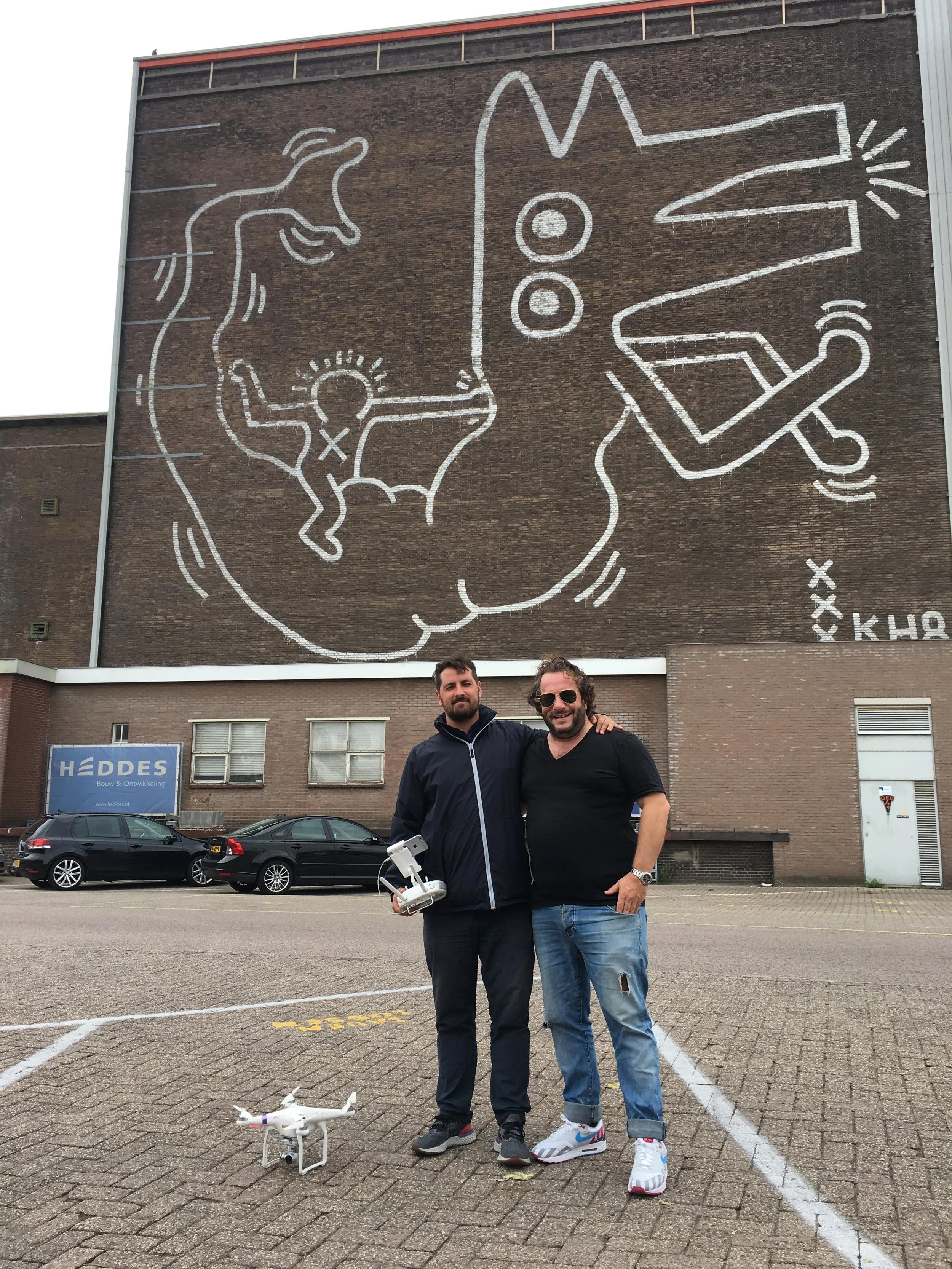
Olivier Varossieau with German Rigol at the mural.
The Reveal
On June 18, 2018, the moment finally arrived.
One by one, the aluminum panels were removed.
Journalists, conservators, stakeholders and supporters gathered to witness what nobody had seen for nearly thirty years.
Mick La Rock still remembers the moment vividly.
“The first lines appeared. It felt like magic. And then relief. The painting was still there.”
Amsterdam had regained a lost Keith Haring.
Monument Status and a New Future
Following the successful restoration, the building received protected monument status.
The designation secured the future of both the building and the mural, recognizing their importance within Amsterdam’s cultural history.
For everyone involved, it represented a major achievement.
Yet preservation is never a one-time event.
Recent visits by Antonio Rava have revealed renewed conservation concerns. Moisture infiltration, salt deposits, damaged rainwater systems and a lack of ongoing maintenance are beginning to affect the mural once again.
The building itself currently stands largely unused and exposed to the elements.
According to Olivier Varossieau, the next chapter should focus not only on preservation but also on giving the building a meaningful cultural purpose.
“I think the building is somewhat neglected at the moment. My dream would be to see it become an art storage facility again, similar to Depot Boijmans Van Beuningen in Rotterdam. Imagine a publicly accessible collection storage on this site, developed together with Ballast Nedam and institutions such as the Amsterdam Museum or the Stedelijk Museum. That would be an incredible future for both the building and the mural.”
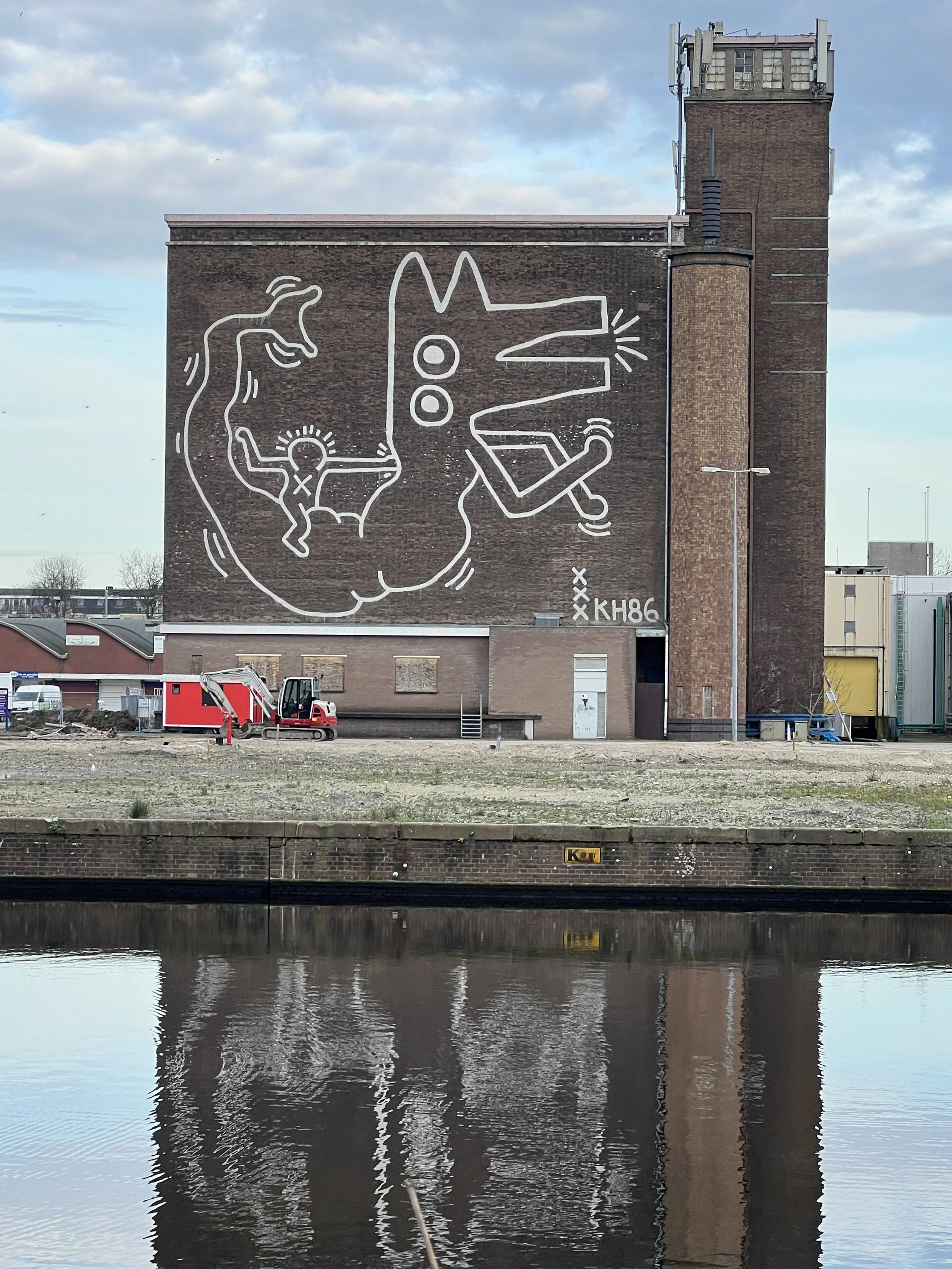
the Sea Monster mural by Keith Haring, photography Olivier Varossieau
Why the Sea Monster Matters
Today, the Sea Monster remains one of the most significant public artworks in the Netherlands.
It is one of the largest surviving Keith Haring murals in Europe, a rare example of his public work and an important reminder of Amsterdam’s connection to the global graffiti and street art movement of the 1980s.
Its survival was made possible through the dedication of many individuals and institutions, including Julia Gruen and the Keith Haring Foundation, Mick La Rock, Antonio Rava, Will Shank, Ballast Nedam, the Stedelijk Museum, Jan Willem Sieburgh, Philip van Maanen, Isabelle Vroom and Olivier Varossieau.
Together, they ensured that a hidden masterpiece could once again be seen by the public.
The challenge now is to ensure that future generations can enjoy it as well.
Upcoming Articles
This article is the first in a series exploring Keith Haring’s relationship with Amsterdam and the preservation of the Sea Monster mural.
Upcoming features will include:
An exclusive interview with Antonio Rava on the conservation of Keith Haring murals.
Patricia Steur on photographing Keith Haring in Amsterdam and New York.
Mick La Rock on rediscovering and saving Amsterdam’s hidden Haring.
Additional perspectives from artists, historians and people who knew Keith Haring personally.
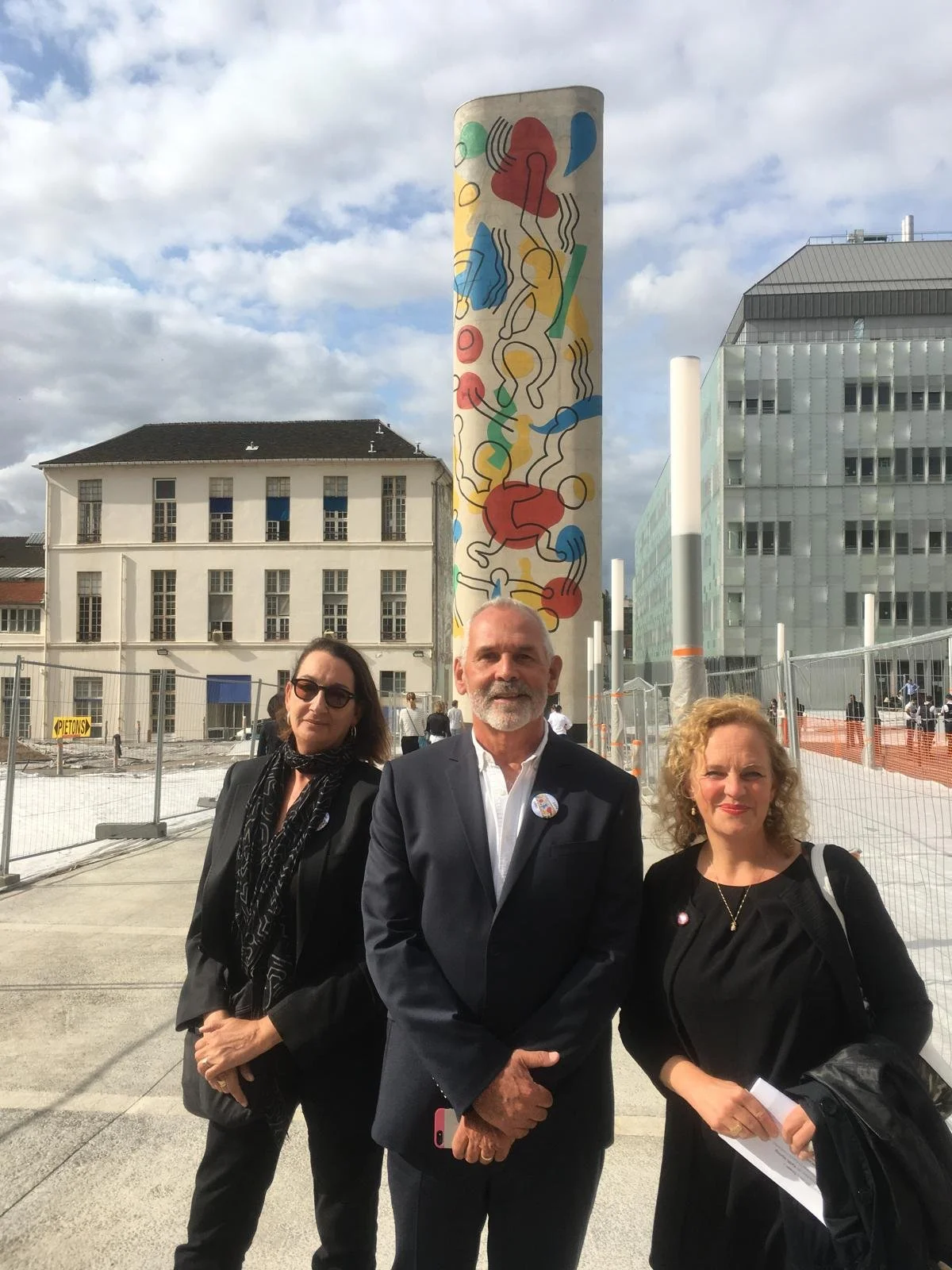
Julia Gruen, Will Shank and Mick La Rock at the Haring tower in Paris, photography Olivier Varossieau